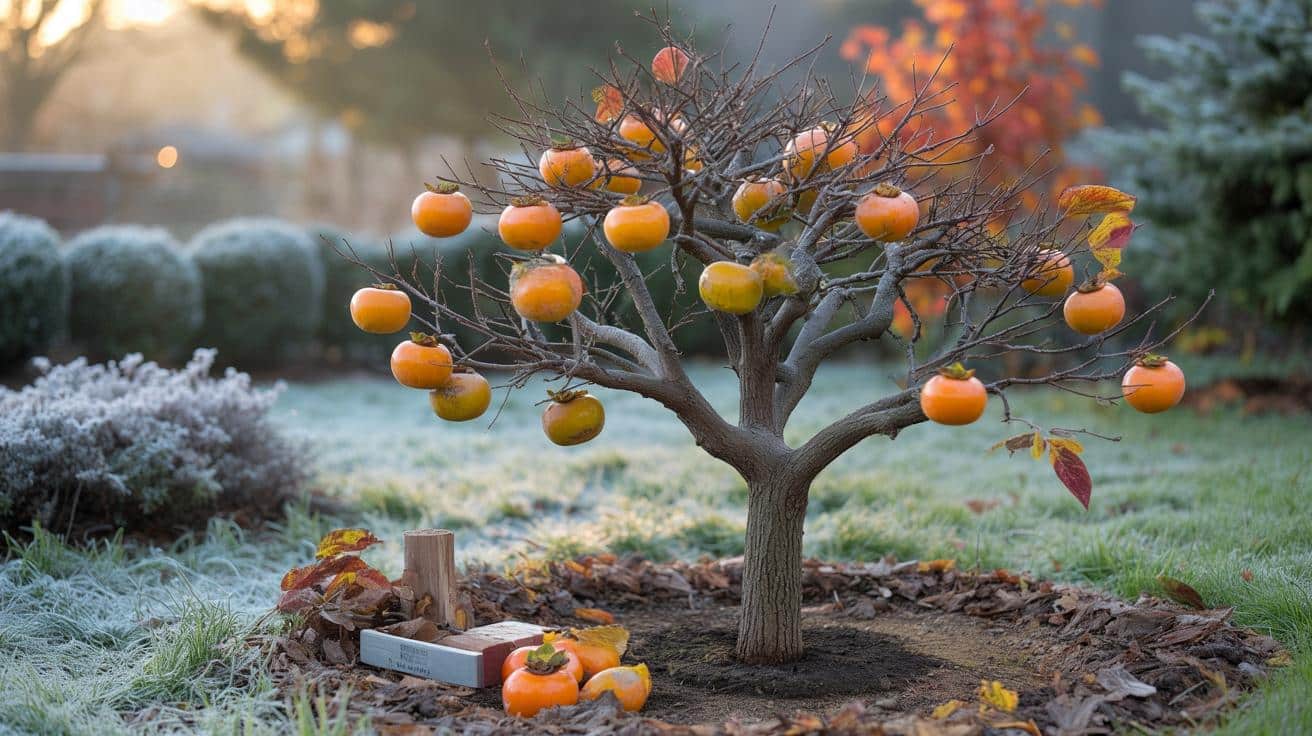
While most gardeners are dreaming of spring, the best window to plant this hardy, orange-fruited tree is actually right now. It shrugs off serious cold, asks for very little care, and can flood your garden with colour and sweet fruit as early as this coming autumn.
A cold-hardy beauty from Asia
The star of this story is the Japanese persimmon, Diospyros kaki, often simply called the kaki tree. Long treated in Europe and North America as a slightly exotic curiosity for mild regions, it has a tougher side than many people think.
This Asian fruit tree copes with temperatures down to about -15 °C, and some robust rootstocks can even handle short dips closer to -18 °C.
That level of cold tolerance opens the door to much of inland western Europe and many parts of the UK and northern US, provided the site is reasonably sheltered and well drained. It is not a giant tree: most garden specimens reach 4–6 metres high, sometimes 8 metres in prime conditions, which makes it manageable for small orchards and larger suburban plots.
Visually, the tree pulls its weight through the seasons. Spring brings glossy green leaves. In autumn, the foliage flames through shades of orange and red before dropping. Then comes the real show: bare branches dotted with glowing orange fruits, like baubles left on a stripped Christmas tree.
Persimmon fruit: sweet, colourful and good for you
Modern varieties of persimmon have changed its reputation in the kitchen. Older types could be astringent, with a harsh, drying taste if eaten before full ripeness. Breeders have worked to remove that drawback.
One of the most popular modern styles is marketed as “Persimon” in supermarkets, often derived from the Spanish cultivar ‘Rojo Brillante’. These fruits can be eaten while still firm, more like an apple than a jelly-soft pudding.
Firm persimmons offer a sweet, fragrant bite with hints of vanilla, apricot and ripe peach, often without a single seed inside.
Their intense orange colour comes from carotenoids such as beta-carotene, while the pulp carries vitamin C, antioxidants and fibre. At a time of year when home-grown fruit is thinning out, a bowl of persimmons on the table brings both brightness and variety to cold-season meals.
➡️ Shoppers in China rush to Ikea after furniture giant announces closure of 7 stores from Feb 2
➡️ Italian torta nua: the recipe for this cloud cake with custard, a pure delight to share
➡️ Grim photo captures polar bear mom and cubs resting in mud in summer heat
➡️ Italians Can’t Believe It: In France, Almost Everyone Cooks Pasta The Wrong Way
➡️ AIChina, Russia condemn Trump’s pressure on Venezuela
Why winter is the smart time to plant
For gardeners used to planting in spring, putting in a fruit tree mid-winter can feel counterintuitive. With persimmon, that winter window is a real advantage, especially if you buy the tree bare-root.
From late autumn to late winter, when the soil is workable and not frozen solid, fruit trees sit in a state of rest above ground while still able to push fine roots into cool, moist soil. That’s exactly what a young persimmon needs to settle in before facing its first hot summer.
Bare-root trees are cheaper, easier to transport and often establish faster than container-grown equivalents, as long as they are planted promptly.
Opting for a grafted tree two or three years old also brings the first harvest forward. With reasonable care, flowers and a handful of fruits can arrive within two to three years, though full cropping typically waits until years four to six.
Choosing the right spot
Persimmon loves sunlight. A fully exposed location gives the best chance of sweet, well-coloured fruit. Shaded corners or areas dominated by tall trees tend to delay ripening and cut yields.
The ideal soil is:
- Well drained, without winter waterlogging
- Moderately rich but not heavily fertilised
- Loamy or slightly clayey, improved with compost if compacted
- Protected from strong, drying winds
Spacing matters too. Allow 4–5 metres between trees so the crown can expand without crowding. Avoid frost pockets where cold air pools in winter, particularly in continental climates where late frosts hit hard.
Planting step by step
Preparing the ground
Planting a persimmon is straightforward, even for beginners. Care at this stage pays back for decades.
- Open a planting hole about 60 cm deep and 60 cm wide.
- Loosen the bottom with a fork or spade to help roots move down.
- Mix the excavated soil with 10–15 litres of well-rotted compost or garden compost.
- Trim damaged or excessively long roots with a clean pair of secateurs.
- If you like, dip the roots in a muddy mix (a “slurry”) of garden soil, water and well-rotted manure to keep them moist and well coated.
Setting the tree in place
Before you backfill, drive a sturdy stake into the hole on the side from which the prevailing wind blows. Then position the tree so the graft union sits above soil level and the collar, where trunk meets roots, is exactly at the final surface.
Do not bury the graft; keeping it above soil line reduces the risk of rot and unwanted shoots from the rootstock.
Refill with the soil–compost mix, treading gently to remove air pockets without compacting the ground too hard. Form a shallow basin around the tree to hold water, then give it a generous drink – at least 15–20 litres – even if the weather is damp. Mulch with 5–8 cm of shredded branches, straw or fallen leaves to stabilise temperature and preserve moisture.
A surprisingly low-maintenance fruit tree
Once established, persimmon tends to be less troubled by disease than many apples or pears. The usual orchard headaches – scab, powdery mildew, downy mildew – rarely cause serious damage. Few pests see it as a favourite target, which makes it a good candidate for chemical-free growing.
For gardeners aiming at a low-spray or no-spray fruit garden, persimmon offers a solid, low-stress anchor tree.
Young trees need regular watering during dry spells for the first couple of summers. A yearly mulch and a light layer of compost in late autumn or early spring usually provide enough nutrition. Heavy fertiliser pushes lush growth at the expense of fruit quality and cold resistance.
Do you really need to prune it?
Compared with other fruit trees, persimmon is forgiving on pruning. The simplest approach suits many small gardens: minimal intervention.
Once a year, late winter is a good time to:
- Remove dead or diseased wood
- Cut out crossing branches that rub together
- Thin congested areas in the centre of the canopy to let in light
Gardeners who prefer a lower tree can lightly shorten a few main branches, but heavy pruning tends to reduce the next year’s crop and can make the tree respond with a tangle of vigorous shoots. A balanced, airy shape gives better fruit colour and makes picking easier.
When to expect those orange harvests
Patience is part of the deal with any fruit tree, and persimmon is no exception. With a grafted plant, first meaningful crops usually come between the third and fifth year after planting. Under good conditions, an adult tree can carry several dozen fruits, sometimes more.
Fruit typically ripens from October to November, with some varieties holding so well that you can pick through early winter if birds leave them alone.
Some gardeners leave the last fruits on the tree until after a light frost, especially with slightly astringent types, as cold can soften the flesh and intensify sweetness. Others prefer to harvest firm and finish ripening indoors, particularly in areas with harsh early winters.
How to eat persimmons: firm or melting
Persimmons fall into two broad groups: those that can be eaten while firm, and those that need to be fully soft to lose their astringency. Many modern garden varieties, including Persimon-types, belong to the first group and are easier for beginners.
| Type | Texture when eaten | How to enjoy |
|---|---|---|
| Firm (non-astringent) | Crisp, like an apple | Slice into salads, eat out of hand, pair with cheese |
| Soft (astringent) | Jelly-like, spoonable | Scoop as a dessert, use in compotes and baking |
Firm fruits are simple: rinse, remove the leafy cap and cut into wedges. Their gentle, honeyed sweetness pairs neatly with soft cheeses, yoghurt or porridge. They also bring colour to autumn salads with walnuts, hazelnuts, rocket or thin shavings of aged cheese.
The soft types, when left to ripen fully until almost collapsing, have a custardy texture ideal for spooning straight from the skin. They make fragrant purees for cakes, quick breads, smoothies or jam-like spreads.
Extra tips, risks and combinations in the garden
Like any long-lived tree, persimmon comes with a few practical points to consider. Young trees can be vulnerable to late spring frosts that damage new growth, especially in colder inland regions. A fleece cover during an unexpected cold snap, or choosing a site with a bit of overhead shelter, can limit that risk.
In very windy gardens, staking for the first three to four years is worth taking seriously. The wood can be brittle when young, and a well-fixed stake with a soft tie prevents rocking and breakage. Checking and loosening the tie each year avoids girdling the trunk.
Persimmon also works well in mixed plantings. Underplanting with low-growing herbs such as thyme or chives can reduce competition from weeds while attracting pollinators. In larger plots, it combines nicely with earlier-fruiting apples or plums, stretching the harvest season from late summer into early winter.
For gardeners who like to plan scenarios, a small family orchard might include one persimmon, a couple of apple trees on semi-dwarf rootstock and a late pear. In that setup, the persimmon becomes the closing act of the fruit year, still offering fresh produce when most other trees are bare and the fruit bowl has turned to imports.
Once the tree is established, the main investment becomes observation rather than labour: watching how your local climate shapes flowering and ripening dates, keeping an eye on bird interest as fruits colour, and adjusting harvest timing from year to year. That evolving relationship can turn a “curiosity from Asia” into one of the most reliable, characterful trees in a cool-temperate garden.