This is where the Italian torta nua steps in: a homely, unpretentious cake with a melt-in-the-mouth crumb and pockets of silky custard. Born in family kitchens rather than glossy patisserie windows, it has become a sort of “cloud cake” star on social media – precisely because it looks impressive while staying very easy to bake.
What makes the torta nua different from other cakes
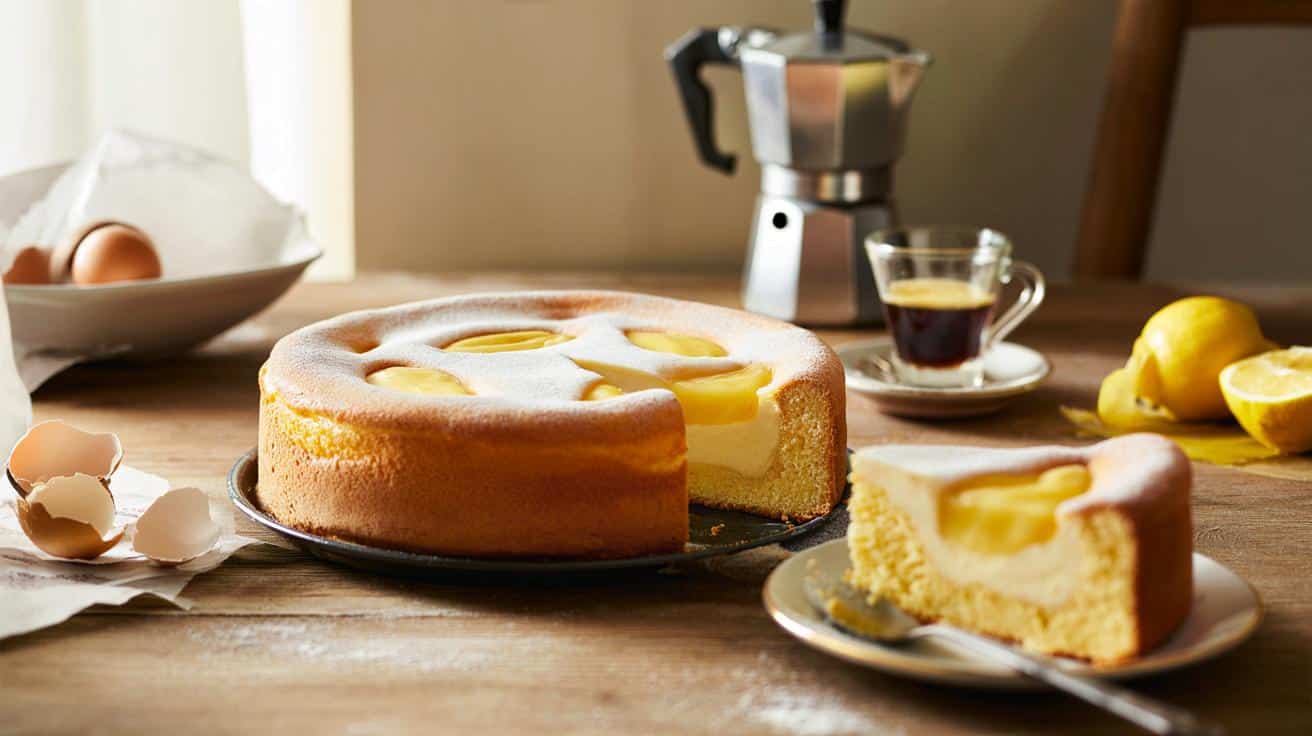
The torta nua, whose name loosely translates as “naked cake”, has one key quirk: the custard is not hidden inside as a filling. Instead, it is spooned on top of the uncooked batter, then gently sinks during baking. The result is a soft, golden sponge riddled with creamy islands under the surface.
This is a family-style Italian cake: simple ingredients, little technique, and a texture that lands somewhere between sponge and pudding.
Each slice looks slightly different. One portion might hold a generous pool of custard, the next only thin marbling. That unpredictability is part of the charm: it feels homemade, not engineered.
Traditionally, this cake belongs on Sunday tables, children’s snacks and after-lunch coffee breaks. No glossy glaze, no elaborate décor – just the smell of sugar, vanilla and lemon floating through the house.
Ingredients: simple building blocks for a “cloud” texture
The success of a torta nua depends less on rare ingredients and more on the way they are mixed. Air is the hidden ingredient here, trapped in the eggs and batter.
The base batter
- Wheat flour (about 250 g for a 22–24 cm tin)
- Caster sugar (around 200 g)
- 3 medium eggs
- Milk, preferably whole, for richness
- Neutral oil such as sunflower – this keeps the crumb tender for days
- Baking powder
- Vanilla extract
- A pinch of fine salt
The custard filling
- Whole milk
- Egg yolks
- Caster sugar
- Cornflour or another fine starch to thicken
- Finely grated untreated lemon zest or a mild lemon flavouring
A little icing sugar usually finishes the cake once cooled, dusted on just before serving.
The contrast between an airy sponge and rich custard is what gives the torta nua its “cloud” reputation.
Step by step: how the cake comes together
1. Start with the custard
The custard needs time to cool and firm up slightly, or it will bleed into the batter instead of forming soft pockets. Milk is gently heated with lemon zest, while yolks, sugar and cornflour are whisked until pale and smooth. The hot milk is added in stages, then everything goes back on the hob until the mixture thickens into a glossy cream that coats the whisk.
➡️ What are the unexpected health benefits of walnuts?
➡️ This milk-braised pork roast is so tender you can cut it with a spoon
➡️ Kanzi the bonobo could play pretend — a trait thought unique to humans
➡️ This melting parsnip–potato gratin even reconciles kids with winter vegetables
➡️ Shoppers in China rush to Ikea after furniture giant announces closure of 7 stores from Feb 2
➡️ Italians Can’t Believe It: In France, Almost Everyone Cooks Pasta The Wrong Way
Cooling matters: the custard is spread into a shallow dish, covered directly with film to avoid a skin, and left at room temperature. Too warm, and it will sink straight to the bottom of the cake; too cold, and it becomes difficult to spoon neatly.
2. Whipping air into the batter
The batter is closer to a light sponge than a dense pound cake. Eggs and sugar are beaten together for several minutes, until they turn very pale and increase significantly in volume. This stage traps tiny air bubbles that the baking powder will expand in the oven.
| Key step | What to look for | Why it matters |
|---|---|---|
| Whipping eggs and sugar | Very pale, foamy mixture, doubled in volume | Creates a light, aerated crumb |
| Adding dry ingredients | Gentle folding, no visible streaks of flour | Preserves the trapped air |
| Custard temperature | Cool, thick but still spoonable | Forms defined creamy pockets |
Oil, milk and vanilla are then added without over-mixing, followed by sifted flour, baking powder and salt folded in with a spatula. Overworking at this stage would deflate the mixture and produce a heavier cake.
3. The “naked” assembly
The batter is poured into a greased and floured tin and levelled. Spoonfuls of cold custard are dropped across the top. The aim is not a regular pattern, more a scatter of generous blobs with batter visible between them.
Resist the instinct to swirl: the oven’s heat will pull the custard down naturally, creating that signature marbled interior.
The cake bakes at around 180°C for 35–40 minutes. To check doneness, a knife is inserted into a spot of plain cake, not through the custard, which will remain soft. Once just firm and deeply golden, it is left to rest briefly in the tin, then cooled on a rack and dusted with icing sugar.
Small tricks for a softer, longer-lasting crumb
Room-temperature ingredients make a real difference. Eggs and milk taken out of the fridge about half an hour beforehand whip more easily and create a smoother batter. That allows the cake to hold more air and gives a fluffier texture. The oil also plays a role here: unlike butter, it stays soft even when chilled, so slices remain tender the next day.
Another quiet trick: avoid opening the oven during the first 20 minutes of baking. Sudden temperature drops can cause the centre to sink, especially in cakes with wet fillings.
Flavour variations that still feel Italian
Once the classic version feels comfortable, the torta nua turns into a playground for gentle experiments. The base technique barely changes, but the taste can shift a lot.
- Chocolate chip twist: stir a handful of dark chocolate chips into the batter for a more indulgent tea-time treat.
- Cappuccino custard: swap lemon for a spoonful of instant coffee dissolved in hot milk, folded into the custard for a café-style aroma.
- Two-tone cream: add unsweetened cocoa to part of the custard and alternate spoonfuls for a vanilla–chocolate effect.
- Citrus shift: replace vanilla in the batter with finely grated orange zest for a brighter, Mediterranean profile.
- Light crunch: sprinkle flaked almonds over the surface before baking for a thin, toasty layer on top.
How Italians like to serve it
This cake pairs naturally with modest, everyday drinks. A lightly sparkling Moscato d’Asti brings gentle sweetness and acidity that lift the custard without overshadowing it. The bubbles also cut through the richness.
Coffee remains the classic partner. A short espresso highlights the contrast between bitter roast notes and soft, vanilla-scented crumb. For children, or anyone skipping caffeine, a glass of cold milk or a light hot chocolate works especially well in the afternoon.
From weekday snack to brunch centrepiece
Beyond its recipe, the torta nua fits neatly into modern home cooking habits. It can be made in advance, sliced easily, and transported without drama. Baked on a Wednesday evening, it doubles as breakfast with coffee, an after-school treat, and an easy dessert if someone drops by.
The cake also adapts well to seasonal occasions. In autumn, a pinch of cinnamon or grated nutmeg in the batter brings warmth. In summer, fresh berries on the side or a spoon of lightly sweetened whipped cream turn it into a relaxed dinner-party dessert without extra stress.
Understanding the custard: what could go wrong
Custard can intimidate home bakers, but for a torta nua the texture is fairly forgiving. If it stays too runny, a little extra time over gentle heat will activate the starch and bring it together. If it thickens more than expected, a splash of warm milk whisked in restores a smooth consistency.
The goal is a cream thick enough to hold its shape on a spoon, but soft enough to melt back into the cake once baked.
Splitting is rare when using cornflour and moderate heat, yet if the mixture looks slightly grainy, taking the pan off the hob and whisking vigorously for a minute often rescues it. Passing the custard through a fine sieve into the cooling dish also guarantees a velvety finish.
Practical tips for UK and US home bakers
For readers used to cups, the recipe translates easily: think roughly 2 cups of flour and 1 cup of sugar for a medium tin. Whole milk gives better flavour, but semi-skimmed still works. Any neutral oil, including grapeseed or light olive oil, can replace sunflower without spoiling the result.
Those baking in small kitchens or with limited equipment can manage this cake using just a handheld whisk and a basic round tin. The batter is forgiving, the custard flexible, and the finished cake surprisingly impressive for something that feels as casual as a midweek bake.