French households feel confident about pasta: big pot, boiling water, generous splash of olive oil, job done. For Italians, that last step is almost a crime against spaghetti. And behind the eye‑rolling lies a real lesson about how starch, salt and timing can turn a cheap packet of pasta into something genuinely restaurant‑worthy.
Why a drop of oil in the water makes Italians wince
In France, adding olive oil to pasta water feels almost professional. The idea sounds sensible: the oil will stop the pasta sticking, keep it glossy and make everything more refined.
For an Italian cook, though, that bottle of oil has no place near the pot.
Traditional Italian cooking keeps pasta water stripped back to three things: water, salt, and a rolling boil. Nothing else.
No oil. No stock cubes. No butter. This stripped‑down approach protects two key elements: the flavour of the wheat and the way the sauce clings to each strand or shape.
Once you accept that pasta dishes are built around this partnership between starch and sauce, the French reflex of oiling the water starts to look less clever and more self‑sabotaging.
What the oil really does – and what it never will
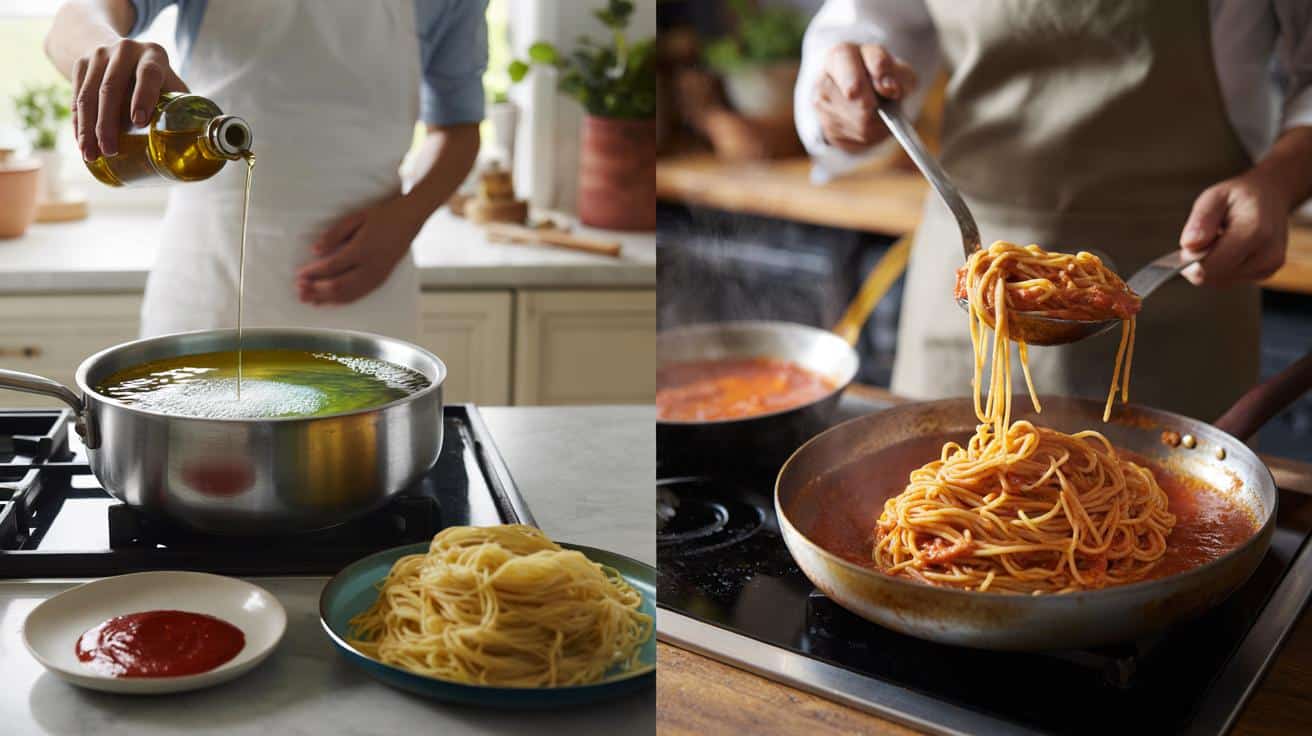
From a basic science perspective, the problem is simple. Oil and water do not mix. When you pour olive oil into a pot, it floats on top. The pasta cooks underneath, in plain water, untouched by that floating layer.
Oil in the water does almost nothing against sticking, but it does a lot of damage to the way sauce grips the pasta later.
When you drain the pasta, a thin film of fat slides onto the surface of each piece. That coating acts like a non‑stick barrier. The sauce, instead of wrapping itself around the pasta, slips off and ends up pooled at the bottom of the plate.
➡️ Italian torta nua: the recipe for this cloud cake with custard, a pure delight to share
➡️ Shoppers in China rush to Ikea after furniture giant announces closure of 7 stores from Feb 2
➡️ Grim photo captures polar bear mom and cubs resting in mud in summer heat
➡️ What are the unexpected health benefits of walnuts?
The result is familiar: bland mouthfuls of plain pasta, followed by a puddle of concentrated sauce you almost need a spoon to finish. Italians spend decades trying to avoid exactly this effect.
The Italian rulebook for cooking pasta properly
Italian chefs don’t rely on gadgets or tricks; they rely on ratios and timing. You can copy most of their method with any ordinary saucepan at home.
- Use plenty of water: about 1 litre for every 100 g of pasta.
- Salt generously: roughly 7–10 g of salt per litre (about 1 level tablespoon).
- Wait for a strong, rolling boil before adding the pasta.
- Stir immediately, then a few more times in the first minutes.
- Taste the pasta 1–2 minutes before the packet time.
- Keep a ladleful of cooking water before draining.
Those tiny adjustments shift pasta from “fine for a Tuesday” to properly al dente: firm, flavourful and satisfying.
Cooking al dente is not just about texture snobbery. Slightly firmer pasta holds its shape better, tastes more of grain, and even digests more slowly, which can steady blood sugar compared with overcooked, mushy pasta.
Stopping pasta from sticking – without a single drop of oil
The real villain in the sticking drama is not the absence of oil; it is starch. During the first minutes of cooking, pasta releases a lot of starch into the water, turning it cloudy and slightly thick.
- Stir the pasta vigorously right after it goes into the boiling water.
- Stir again two or three times in the first three minutes.
- Respect the water quantity. A small, crowded pan encourages clumps.
Once cooked, drain quickly and avoid letting the pasta sit in the colander. That’s when it dries out and fuses into a solid mass.
The best move: send the pasta directly from the colander into a pan where hot sauce is already waiting.
This hot‑on‑hot contact keeps everything separate yet coated, giving that silky, restaurant‑style finish most home cooks try to achieve with extra cream.
The decisive moment: when pasta meets sauce
In much of France, pasta is drained, plonked in a bowl, and sauce is spooned on top. For Italians, that is like serving toast next to butter and asking guests to sort it out themselves.
- Keep the sauce hot in a pan or deep skillet.
- Tip in the drained pasta immediately, without delay.
- Add 2–3 tablespoons of cooking water for two portions.
- Toss on medium heat for 1–2 minutes until glossy and unified.
The starchy cooking water behaves like a natural emulsifier, binding sauce and pasta together, so you need less cream and less fat.
This technique, called “mantecare” in Italy, is used for everything from simple tomato spaghetti to cacio e pepe. The idea is always the same: finish the dish in the pan, not in the serving bowl.
Step‑by‑step method for near‑perfect pasta at home
For most family meals, this simple framework works for almost any pasta shape and sauce style.
- Bring 4 litres of water to the boil for 400 g of pasta.
- Stir in 35–40 g of salt (around 4 level tablespoons).
- Wait until the boil returns properly, then add the pasta.
- Stir straight away, then again a few times at the start.
- Taste the pasta 1–2 minutes before the guidance on the packet.
- Once al dente, scoop out about 150 ml of cooking water.
- Drain, then move the pasta straight into the hot sauce.
- Add cooking water little by little until the sauce looks smooth and lightly shiny.
This approach mirrors what many Italian trattorias do every lunchtime. No industrial tricks, just attention to water, salt, starch and timing.
Comfort recipe: winter spaghetti that feels creamy without cream
To test this “no oil in the water” idea, you can try a quick, wintry pasta dish that feels rich without being heavy.
Ingredients for 2–3 people
- 300 g spaghetti
- 1 medium leek
- 2 medium carrots
- 1 yellow onion
- 2 garlic cloves
- 200 ml oat milk (or another neutral plant drink)
- 2 tablespoons olive oil (for the pan only)
- 1 tablespoon nutritional yeast
- Fine salt
- Freshly ground black pepper
- A pinch of nutmeg
Method in four stages
- Cook the pasta “Italian style”: big pot, well‑salted water, stirring at the start, drain while still al dente.
- Prep the vegetables: finely slice leek and onion, cut carrots into thin half‑moons, crush or chop the garlic.
- Make the sauce: soften the veg in olive oil, add garlic, then simmer with oat milk, nutritional yeast, salt, pepper and nutmeg until just thickened.
- Combine like a trattoria: add the drained spaghetti straight into the pan, loosen with a ladle of pasta water, toss until everything looks lightly creamy.
Served immediately, it feels indulgent, yet the only fat comes from a small amount of oil in the pan, not from a slick of oil lost in the cooking water.
Common pasta mistakes in France – and fast fixes
Many French cooks will recognise at least one of these scenarios.
| Problem | Likely cause | Simple fix |
|---|---|---|
| Pasta dry and stuck in the colander | Left to sit after draining | Have the sauce hot and ready, then mix pasta and sauce immediately. |
| Pasta tastes bland | Water not salty enough | Salt the water properly; the pasta should taste seasoned before any sauce. |
| Sauce at the bottom of the dish | Too much fat on the pasta or sauce added cold and late | Skip oil in the water, finish pasta and sauce together in a pan with cooking water. |
Two terms that change the way you cook pasta
Italian cooks often talk about al dente and amido (starch), and each one affects how you cook.
- Al dente: literally “to the tooth”. The centre of the pasta should resist slightly when you bite, not crunch, not collapse. That tiny firmness holds sauce better and keeps the shape intact.
- Starch: the white, cloudy element released into the water. Used carelessly, it makes pasta stick. Used smartly, in small ladlefuls, it turns sauce silky without extra cream.
Once you think in these terms, that spoon of olive oil in the water stops looking like protection and starts looking like a barrier between the starch and the sauce you paid for.
What changes if you adopt the Italian way?
Switching from “French habit” to “Italian method” has a few side effects beyond taste. You may find you use fewer ready‑made sauces, because a simple tin of tomatoes, some garlic and a bit of cooking water already feel satisfying.
You also gain control over richness. By relying on starchy water for texture, you can slowly reduce the amount of cream and butter in weeknight pasta without losing that comforting feel. For families, that brings a quieter benefit: more flavour, slightly lighter plates, and fewer arguments about who gets the last spoonful of sauce at the bottom of the bowl.