As temperatures drop, many families fall back on pasta bakes and frozen pizzas. Yet a simple parsnip and potato gratin, creamy and soft enough to eat with a spoon, can turn winter veg sceptics – including children – into genuine fans.
Why this winter gratin changes minds about “boring” veg
Parsnips rarely top anyone’s favourites list. They’re seen as old-fashioned, earthy, even a bit bossy in flavour. Paired with potatoes and slow-cooked in cream, that reputation shifts entirely.
In this gratin, parsnip becomes unexpectedly gentle. Its flavour leans slightly sweet, with a whisper of vanilla and a faint peppery note. The potato brings familiarity and roundness, so no single ingredient shouts louder than the others.
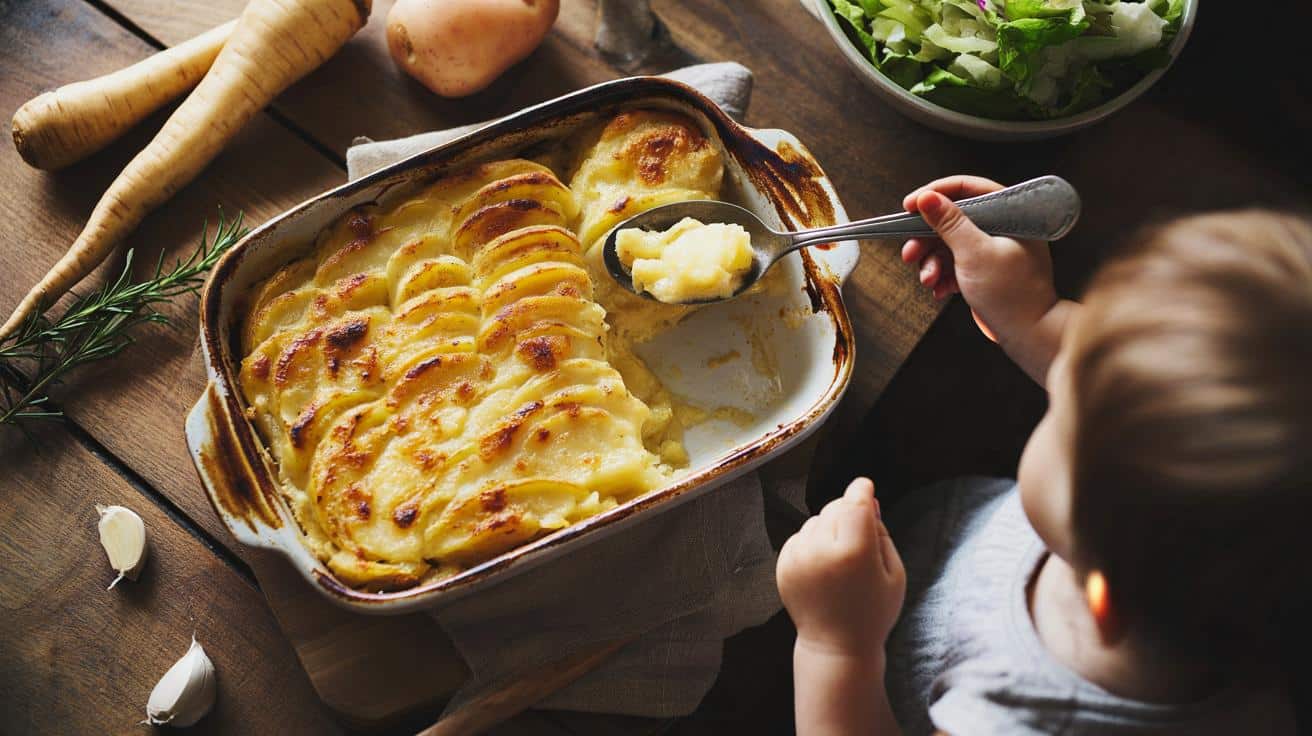
Thin slices of parsnip and potato melt into one another, creating a soft, layered “cushion” with a golden top and a comforting, homely smell.
That balance is what makes the dish so effective for families. It looks like a classic potato gratin, it behaves like one on the fork, yet it smuggles in a substantial portion of seasonal roots.
The basic recipe: a weeknight-friendly comfort dish
The method is deliberately simple. Most of the work is slicing; the oven does the rest while you sort homework, emails or the washing up.
Core ingredients for 4–6 people
- 500 g parsnips, firm and unblemished
- 500 g floury or all-purpose potatoes
- 400 ml double cream or heavy cream
- 2 cloves of garlic, finely chopped or pressed
- 2 sprigs fresh rosemary, leaves stripped
- Fine salt and freshly ground black pepper
- A small knob of butter for greasing the dish
Served with a salad, the gratin easily feeds four hungry adults. Used as a side, it stretches to six plates without feeling stingy.
Step-by-step: from chopping board to table
The timings suit a typical weeknight: around 15 minutes of prep, roughly 30 minutes in the oven.
| Stage | Approx. time |
|---|---|
| Preparation | 15 minutes |
| Oven cooking | 30 minutes at 180°C / 350°F |
1. Prep the vegetables
- Peel the parsnips and potatoes.
- Rinse briefly, then dry in a clean tea towel to remove excess moisture.
- Slice both into thin rounds, about 2–3 mm thick; thinner slices cook faster and give a more uniform, melt-in-the-mouth texture.
2. Mix the creamy base
- Pour the cream into a bowl.
- Stir in the chopped garlic, rosemary leaves, salt and pepper.
- Taste the mixture: it should already feel well seasoned, as it needs to flavour all the layers.
3. Build the layers
- Preheat the oven to 180°C (350°F), fan if available.
- Butter a large ovenproof dish.
- Arrange a first layer of parsnip and potato slices, loosely alternating the two.
- Spoon some of the cream mixture over the top.
- Repeat: vegetables, cream, vegetables, cream, until you run out.
- Finish with a final neat layer of slices and pour the remaining cream evenly over the surface, shaking the dish gently so it seeps between the gaps.
4. Bake to soft, golden perfection
- Bake for about 30 minutes.
- The top should be nicely coloured and a knife should slide through the layers with no resistance.
- If the surface browns too fast, cover loosely with baking paper and continue cooking until the centre is tender.
Let the dish stand for five minutes before serving. This short rest helps the cream settle, so each portion holds together instead of collapsing on the plate.
➡️ This milk-braised pork roast is so tender you can cut it with a spoon
➡️ Shoppers in China rush to Ikea after furniture giant announces closure of 7 stores from Feb 2
➡️ Italians Can’t Believe It: In France, Almost Everyone Cooks Pasta The Wrong Way
➡️ AIChina, Russia condemn Trump’s pressure on Venezuela
How this gratin quietly wins over children
For many families, parsnips fall in the same mental category as Brussels sprouts: “grown-up food”. This recipe sidesteps that prejudice with two clever tricks: texture and appearance.
First, the texture is almost spoon-soft. There are no firm chunks to pick out and no visible fibrous edges. Second, on the plate, parsnip slices look almost identical to potato slices. Unless a child watches you cook, most will assume it’s a classic potato bake.
The gratin presents itself as “just a creamy potato dish”, which lowers resistance and shifts the focus from the vegetable to the overall comfort of the meal.
Finer slicing helps if you have very suspicious eaters. Serving it with something familiar – roast chicken, ham, or crisp bacon pieces scattered on top – also keeps attention on the whole plate rather than on individual ingredients.
Smart twists that keep the recipe flexible
Once you’ve made the basic version once or twice, small tweaks let you steer the dish in different directions without turning it into a completely new recipe.
Swap the herbs, change the mood
- Use thyme instead of rosemary for a lighter, Mediterranean accent.
- Try sage for a deeper, autumnal perfume that pairs well with roast pork or turkey.
Go for a crisp, gratinated crust
- Scatter 80–100 g of grated hard cheese over the top before baking – cheddar, Gruyère, Comté or parmesan all work well.
- For extra colour, drizzle a spoonful of cream over the cheese just before the dish goes into the oven.
A more rustic version with onions and smoked bacon
- Slowly fry a sliced onion in a little oil until soft and golden.
- Add about 100 g of smoked lardons or streaky bacon and cook until lightly browned.
- Spread this mixture between two layers of vegetables before you pour over the cream. The result is richer and hearty enough to serve as a one-dish meal with a green salad.
Dairy-free twist that keeps all the comfort
- Swap dairy cream for 400 ml of oat, soy or cashew cream.
- Stir in 2–3 tablespoons of nutritional yeast for a mild, cheesy flavour.
- Serve with peppery leaves such as rocket or lamb’s lettuce to keep the meal plant-based yet still warming.
What to serve with a parsnip–potato gratin
The gratin sits somewhere between side dish and main course. On a busy evening, many households simply eat it as the star of the meal with a sharp salad to cut through the richness.
- A green salad with mustard vinaigrette and a few walnuts for crunch
- Roast chicken breast or leftover pork roast, sliced thin
- Simple baked fish with lemon and herbs for a lighter plate
The dish reheats well the next day. Covered and warmed gently at around 160°C (320°F), it regains much of its original softness, which makes it a strategic option for Sunday batch cooking.
Budget-friendly comfort during the colder months
Parsnips and potatoes are among the most affordable winter vegetables in both the UK and US. They store well, travel easily from local farms, and usually sit at the lower end of the price scale compared with out-of-season courgettes or imported peppers.
Turning cheap root vegetables into a gratin gives the feel of a “treat dinner” without stretching the shopping budget.
There’s also the psychological side: the smell of cream, garlic and herbs drifting through the house as the dish bakes. Many parents report that they barely need to call anyone to the table; footsteps arrive as soon as the oven timer beeps.
Helpful context: why parsnips behave so well in the oven
For those more used to carrots, parsnips can be a bit of a mystery. They’re richer in natural sugars, which explains that gentle sweetness and their ability to caramelise at the edges when roasted or baked.
They also contain more fibre than potatoes, which slows digestion and can help keep you full for longer. Combined with potatoes’ starch, you get a texture that is plush without needing mountains of cheese to hold it together.
Practical ideas for stretching one tray into several meals
Leftover gratin can be turned into quick lunches. A small square reheated and topped with a fried egg and a handful of salad leaves makes a satisfying desk meal. Another option is to spoon any remaining gratin into a small pan with stock, mash lightly and heat: you’ll have a creamy parsnip–potato soup in minutes.
For families trying to reduce meat without alarming anyone, serving this gratin as the hearty centre of the plate, with just a little meat on the side, is one of the easier shifts. The dish feels indulgent and filling enough that few people notice the smaller portion of protein.