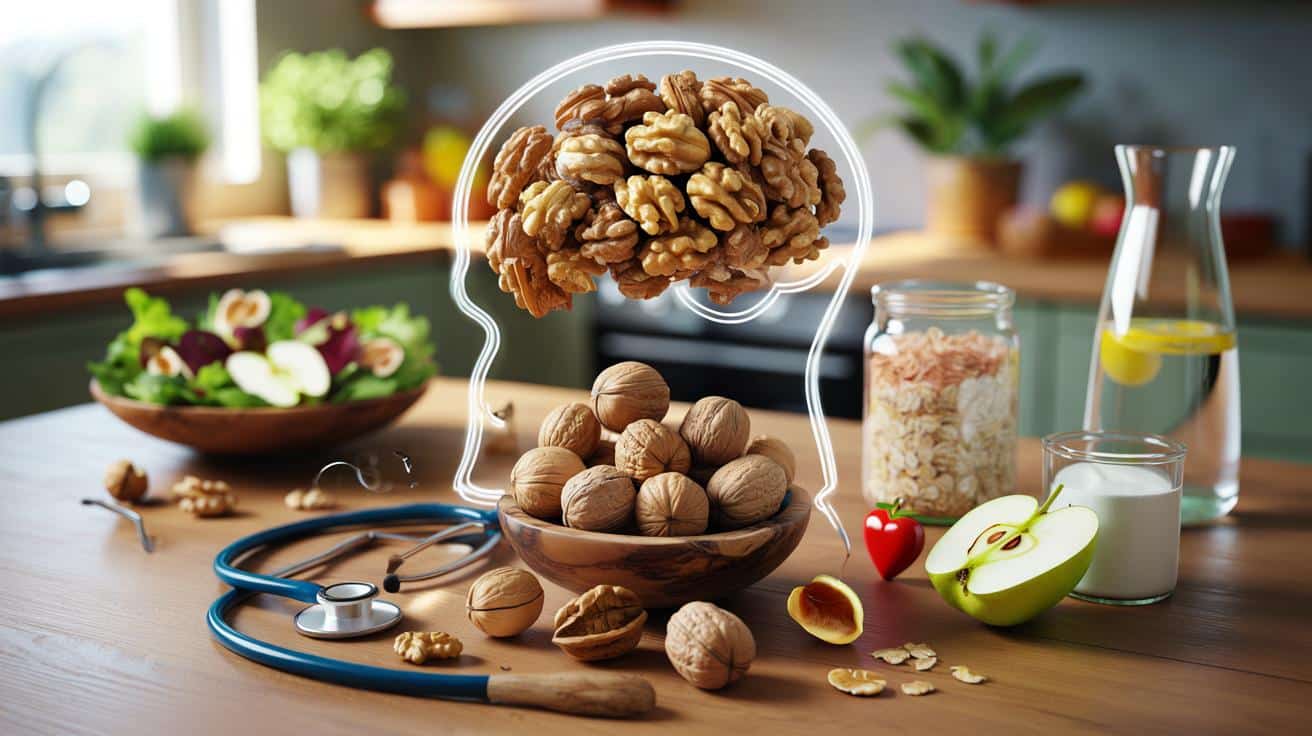
Most of us grab a walnut as if it were just another snack. Behind that hard shell, though, sits a compact mix of fats, fibre and protective compounds that nutrition researchers keep circling back to. Eaten smartly, walnuts can tweak cholesterol levels, support ageing brains and even calm blood sugar swings.
Why walnuts are far more than a simple snack
Walnuts sit in the same family as almonds and hazelnuts, but their nutritional profile stands out. A small handful – around 30 grams, or seven to ten halves – brings together several building blocks your body uses all day long.
- Roughly 180–200 kcal
- 15–20 g of fat, with a large share as omega‑3 and omega‑6
- 4–5 g of plant protein
- 2–3 g of fibre
- Vitamin E and several B vitamins
- Minerals such as magnesium, potassium, phosphorus, manganese and copper
One small handful of walnuts carries more useful nutrition than many biscuits, cereal bars or crisps of the same calorie load.
This mix gives lasting satiety. You feel full for longer, which makes it easier to step away from ultra-processed snacks later in the day.
An antioxidant shield against premature ageing
Our cells constantly face stress from pollution, smoking, poor sleep and highly processed food. This environment generates free radicals, unstable molecules that damage DNA and speed up cellular ageing.
Walnuts are rich in polyphenols, powerful antioxidant compounds. They sit both in the nut itself and, crucially, in the thin brown skin that often gets peeled off.
Removing the papery brown skin strips away a significant share of the walnut’s antioxidant punch.
Walnuts also contain melatonin. Better known as the “sleep hormone”, it acts in the body as an antioxidant too. It helps protect cell membranes and supports immune defences.
Regular walnut consumption has been linked in population studies to lower markers of oxidative stress and inflammation. That pattern fits with a reduced risk of some inflammatory conditions, certain cancers and age-related neurodegenerative diseases, when walnuts are part of an overall balanced diet.
➡️ This milk-braised pork roast is so tender you can cut it with a spoon
➡️ Grim photo captures polar bear mom and cubs resting in mud in summer heat
➡️ AIChina, Russia condemn Trump’s pressure on Venezuela
➡️ Italians Can’t Believe It: In France, Almost Everyone Cooks Pasta The Wrong Way
➡️ Shoppers in China rush to Ikea after furniture giant announces closure of 7 stores from Feb 2
How walnuts support the heart and blood vessels
Cardiologists often single out walnuts when talking about heart-friendly foods. More than 70% of the fat in walnuts is polyunsaturated, including alpha-linolenic acid, a plant-based omega‑3 fatty acid.
- These fats help improve blood lipid profiles.
- They support flexibility of the arteries.
- They encourage smoother blood flow.
Clinical trials suggest that adding walnuts to a healthy eating pattern can reduce LDL cholesterol, sometimes labelled “bad” cholesterol. Walnuts also bring phytosterols, plant compounds that reduce cholesterol absorption in the gut.
For people at risk of cardiovascular disease, a daily portion of walnuts can become one more practical tool alongside medication, exercise and blood pressure control.
They do not replace medical treatment, but they fit well into a heart-protective lifestyle, particularly a Mediterranean-style pattern rich in plants and unsaturated fats.
The brain has a soft spot for walnuts
The resemblance between a walnut half and a tiny brain is more than a visual joke. Walnuts provide several nutrients that help the nervous system function smoothly over time.
Vitamin E acts as an antioxidant inside nerve cells, protecting delicate membranes. Omega‑3 fats integrate into the structure of those membranes, influencing how signals pass from one neuron to another.
- They help shield neurons from oxidative stress.
- They support memory, concentration and mental clarity.
- They may contribute to a lower risk of cognitive decline with age.
Observational studies associate regular walnut intake with better cognitive performance in older adults and a reduced likelihood of certain neurodegenerative disorders, including Alzheimer’s disease. Walnuts are not a cure, yet they offer a realistic, food-based way to support brain health alongside sleep, social contact and physical activity.
Weight, satiety and blood sugar: why calories are not the whole story
Walnuts are energy-dense, so anyone watching their weight can feel nervous about them. The nuance lies in how the body responds to those calories.
Their trio of fibre, protein and unsaturated fat promotes a strong feeling of fullness. A modest handful in the afternoon can curb the urge for sugary snacks, which typically have a much sharper impact on blood sugar.
Walnuts also have a low glycaemic index. They barely budge blood glucose on their own, and when eaten with carbohydrate-rich foods, they can blunt the spike.
Some of the fat in whole walnuts passes through the gut without being fully absorbed, so the “on-paper” calories slightly overstate what the body takes in.
That does not mean an open invitation to eat them by the bowlful. It does mean that, used intelligently, walnuts fit comfortably into a weight-management strategy rather than working against it.
How much walnut is enough – and when it’s too much
Because walnuts are so concentrated, quantity matters. Nutrition guidelines often land on:
- 5–10 whole walnuts a day, or around 25–30 g of kernels
- One small handful added to a meal or snack
Beyond that, a high long-term intake of fat, even “good” fat, can unsettle metabolism in some people, particularly those with existing metabolic issues.
There are also specific cautions. Walnuts contain oxalic acid, which can contribute to kidney stone formation in susceptible individuals. Anyone with a history of stones should speak with their doctor before increasing intake significantly.
- Walnuts are a common allergen and can trigger severe reactions, including anaphylaxis.
- Some people notice mouth ulcers or irritation after eating them.
In those cases, medical advice from a GP or allergist is the safest route before making walnuts a daily habit.
Choosing walnuts that genuinely support your health
Not all walnuts on the shelf bring the same benefits. Rancid or over-roasted nuts lose nutrients and may irritate the digestive tract.
- Favour fresh, whole, unsalted and unroasted walnuts.
- Limit heavily roasted or flavoured versions, as heat damages some vitamins and antioxidants.
- Organic options help cut exposure to pesticide residues.
At the shop, your senses are your best guide:
- The shell should be intact, without cracks or dark stains.
- The kernel should feel firm and crunchy, not soft or rubbery.
- The smell should be neutral or mildly nutty, never sharply bitter or stale.
A strong rancid smell signals oxidised fats, a drop in nutritional quality and a less pleasant experience in the bowl.
Three simple ways to use more walnuts every day
1. A quick, filling afternoon snack
- 10 g of walnut halves (3–4 halves)
- One small apple or pear
- One plain yoghurt, if hunger is stronger
Stir chopped walnuts into the yoghurt and eat the fruit alongside. This combination balances fibre, protein and healthy fat, leaving you satisfied until dinner.
2. An evening salad that actually keeps you going
- Roughly 80 g of salad leaves or lamb’s lettuce
- Half a pear or apple, sliced
- 30 g of blue cheese, Roquefort or goat’s cheese
- 15 g of walnut halves (5–6 halves)
- 1 tbsp walnut oil and 1 tsp balsamic vinegar
Toss everything together and dress with the oil and vinegar. The mix of leafy greens, fruit, cheese and walnuts provides omega‑3 fats, antioxidants and enough substance to feel like a proper meal.
3. A steady-energy breakfast bowl
- 30 g rolled oats
- 150 ml milk, dairy or plant-based
- 10 g chopped walnuts
- One small banana, sliced
Warm the milk with the oats until creamy, then top with walnuts and banana. The result is a slow-release breakfast rich in fibre, minerals and plant protein.
Walnuts on your plate: quick comparison with other snacks
| Snack (approx. 30 g) | Main nutrients | Effect on satiety and blood sugar |
|---|---|---|
| Walnuts | Unsaturated fats, protein, fibre, antioxidants | Strong satiety, minimal blood sugar rise |
| Chocolate biscuit | Refined carbs, sugar, saturated fat | Fast energy spike, short-lived fullness |
| Plain crisps | Starch, refined oil, salt | Weak satiety, encourages more snacking |
Key terms that often come up with walnuts
Anyone reading about walnuts will meet a few recurring scientific words. Three of them shape much of the conversation.
- Omega‑3 fatty acids: a family of polyunsaturated fats that the body cannot make and must obtain from food. In walnuts, the main type is alpha-linolenic acid, which can convert in small amounts into longer-chain omega‑3s used in the heart and brain.
- Polyphenols: plant compounds acting as antioxidants. In walnuts they are concentrated in the brown skin and help neutralise free radicals produced by stress, smoking or pollution.
- Glycaemic index: a measure of how quickly a carbohydrate-rich food raises blood sugar. Walnuts score low, which makes them a useful pairing with high-carb foods like bread or porridge.
Practical scenarios: when walnuts make a difference
For someone with pre-diabetes, swapping a mid-morning pastry for yoghurt, fruit and a few walnuts can flatten blood sugar peaks and reduce cravings later in the day. That single change, repeated daily, carries more impact than many realise.
For an older adult worried about memory, adding a small handful of walnuts to breakfast and favouring walnut oil in salads offers an accessible way to support cognitive health, especially when combined with brisk walking and regular social activity. The effect is subtle, but over years, those small daily decisions can shift the trajectory of ageing in a quieter, more sustainable way than any “miracle” cure.