On dark winter evenings, few people feel like whisking egg whites or tackling a fiddly tart. That is exactly how one modest, express pear and hazelnut clafoutis has quietly become the go‑to dessert in many French family kitchens – so reliable that some hosts say they barely dare serve anything else.
Why this winter clafoutis keeps stealing the show
The first sign that this dessert works comes long before anyone takes a bite. Within 20 minutes in the oven, the house smells of warm pear, butter and toasted hazelnut. Guests pause mid‑conversation and crane their necks toward the kitchen.
That smell of roasted fruit and nuts sends a clear message: dinner is carrying on, and you are being looked after.
On the plate, the texture sits halfway between flan and sponge. The batter stays creamy, the pears soften into silky chunks, and hazelnut shards break up each mouthful with a gentle crunch. It is rich enough to feel like a proper pudding, yet light enough that people still accept “just a small slice” after a big meal.
The basic ingredients: short list, big comfort
One reason this clafoutis keeps being made is its simplicity. The original French version calls for only a handful of staples:
- Ripe pears, ideally flavoursome varieties such as Conference or Comice
- Eggs
- Whole milk
- Plain wheat flour
- Caster sugar
- Good butter, preferably lightly salted
- Hazelnuts, whole or roughly chopped
- A touch of vanilla
Because the list is so short, quality matters. Using watery, underripe pears or thin skimmed milk changes the result more than you might expect. Whole milk brings a custardy mouthfeel. Properly ripe fruit brings perfume and sweetness, so you do not need to overload the batter with sugar.
Choosing pears that actually turn soft
In mid‑winter, pears are one of the few fruits that still feel generous and seasonal. For baking, the key is balance: you want them to hold their shape, yet turn soft under a fork.
Press gently around the stem; if the flesh gives slightly without collapsing, the pear is ready for the oven.
Firmer fruit will stay chalky and bland. Overripe pears will leak too much juice, flooding the batter and leaving the clafoutis heavy in the centre. Leaving pears on the counter for a couple of days, rather than in the fridge, usually pushes them to that sweet spot.
➡️ What are the unexpected health benefits of walnuts?
➡️ Italian torta nua: the recipe for this cloud cake with custard, a pure delight to share
➡️ AIChina, Russia condemn Trump’s pressure on Venezuela
➡️ Grim photo captures polar bear mom and cubs resting in mud in summer heat
A batter as easy as slightly thick crêpe mix
Technically, clafoutis batter is not far from pancake batter: eggs, sugar, flour, milk and melted butter. The aim is a fluid, glossy mix that lightly coats the back of a spoon.
Step‑by‑step at a glance
- Preheat the oven to about 180°C (350°F).
- Butter a round baking dish, then dust it with sugar for a thin, caramelised crust.
- Whisk eggs and sugar until pale and foamy.
- Sift in flour, whisking to keep the mixture smooth.
- Pour in melted butter and whisk again.
- Gradually add milk, stirring until the batter is lump‑free and slightly thicker than pancake batter.
- Finish with vanilla.
All of this happens in a single bowl, which keeps the washing‑up under control – a small but real luxury when you are hosting.
Pears first, batter second: building that homely look
The pears are what make the clafoutis look inviting and rustic rather than prim and polished. This is not supposed to be a perfectly flat, pastry‑shop tart.
- Peel the pears.
- Halve them and remove the cores.
- Cut into generous chunks of about 2–3 cm.
- Scatter them loosely in the prepared dish.
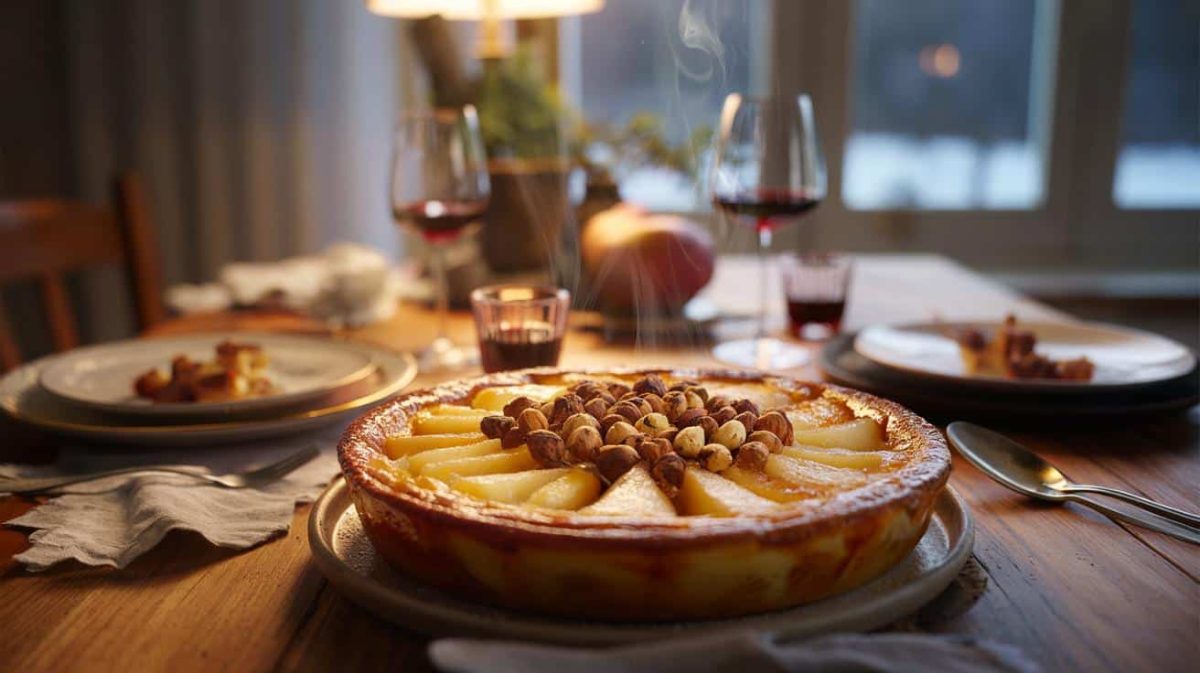
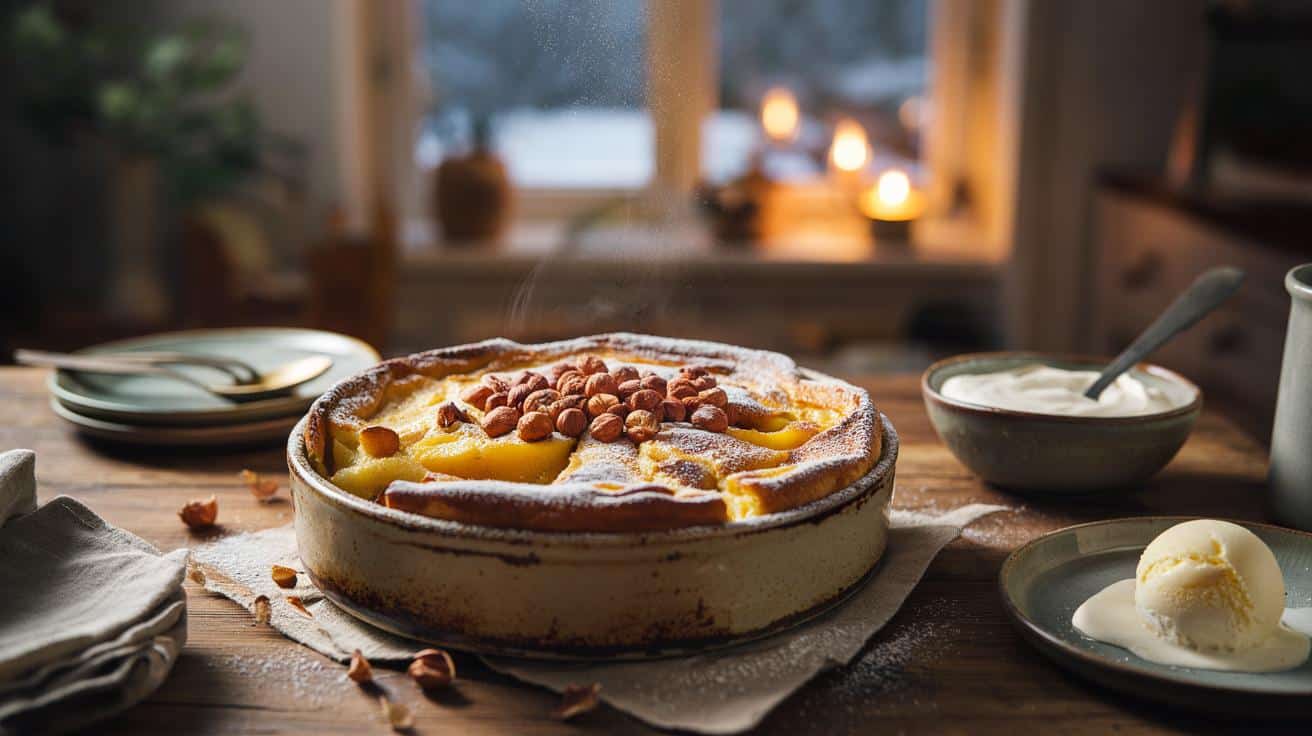
You do not need to pack the fruit tightly. Leaving gaps allows the batter to flow between the pieces. When you pour it in, the pears should still peek through the surface. That is what gives the baked dessert its comforting “family pudding” appearance.
The decisive move: hazelnuts on top
Without nuts, this is a gentle fruit custard. With hazelnuts, it becomes something people remember. The trick is to keep the nuts in chunks, not dust.
- Roughly chop hazelnuts if they are whole.
- Sprinkle them evenly over the surface after the batter and fruit are in the dish.
Staying on the surface, the hazelnuts toast in the heat, giving a praliné‑like aroma and a satisfying crunch with every spoonful.
The contrast is what makes guests reach back for seconds: soft fruit, creamy centre, then the snap of roasted nuts.
Baking times and visual cues
Most ovens bring this clafoutis to the right point in roughly 22–30 minutes at 180°C. Rather than relying only on the timer, watch the texture.
| Sign | What it means |
|---|---|
| Golden, slightly shiny top | The surface sugar has started to caramelise. |
| Set, slightly puffed edges | The batter is cooked through on the sides. |
| Gently wobbly centre | The middle is just set and still creamy. |
If the centre no longer moves at all, the batter has probably gone a bit far and will feel firmer, more like cake than custard. Pull the dish out as soon as it reaches that soft wobble and let it rest for around 10 minutes so the structure stabilises.
Small habits that make the clafoutis hard to mess up
Home cooks who make this often tend to repeat the same small habits.
- Use whole milk for a fuller texture.
- Sieve the flour if you have 30 spare seconds; it prevents little lumps.
- Leave some fruit visible at the top for both flavour and appearance.
- Keep nuts in proper pieces for a real crunch.
- Respect the short resting time after baking so slices hold together on the plate.
These details sound minor, but together they make the difference between a passable pudding and a recipe guests ask you to write down.
Easy variations when the fruit bowl looks bare
Once you know the base, the recipe turns into a template. You can swap elements according to what you find at the back of the cupboard, especially useful in January when shops and wallets both feel a bit drained.
- Replace hazelnuts with flaked almonds for a lighter crunch.
- Mix pears with tart apples in equal parts for extra freshness.
- Fold a handful of dark chocolate chips into the batter before baking.
- Use unrefined cane sugar for a deeper, caramel note.
The cooking time and method stay largely the same. Only the toppings and fruits change mood, from nutty and subtle to richer and more chocolate‑forward.
Serving tricks that turn it into a dinner‑party dessert
Strictly speaking, you can serve this clafoutis straight from the oven dish with a plain spoon. In many families, that is exactly what happens. A few small additions, though, can make it feel restaurant‑worthy without actually adding work.
- Serve it warm rather than hot, so the custard has set but the fruit is still steamy.
- Add a spoonful of thick crème fraîche or Greek yoghurt for tang against the sweetness.
- Top each portion with a scoop of vanilla ice cream for a hot‑cold contrast.
- Dust with a little icing sugar at the last minute for a “winter snow” effect.
Leftovers, on the rare occasions there are any, keep in the fridge for up to two days. A brief reheat in a low oven or a short burst in the microwave revives the softness.
What “clafoutis” actually means – and how flexible it is
Clafoutis is a traditional French dessert from the Limousin region, originally made with cherries baked in a lightly sweet batter. Over time, cooks started using other fruits – plums, apricots, apples – while keeping the same basic mixture.
Technically, purists reserve the word “clafoutis” for versions with cherries and call other fruit versions “flognarde”. In everyday speech, though, most French families happily use “clafoutis” for anything that follows this formula: fruit + pourable batter + quick bake.
Why such a simple recipe changes the tone of a winter evening
From a practical angle, this dessert removes a lot of stress. It uses one bowl, standard ingredients and short oven time, so you can start it when guests finish their main course and still bring it to the table warm.
Psychologically, a shared dish that everyone spoons into softens the atmosphere. It feels less formal than individual plated desserts. People ask for “just one more spoonful”, tell stories, stay at the table a little longer. That might be why some hosts eventually stop looking for alternatives and stick with this pear and hazelnut clafoutis whenever the nights turn cold and the house fills with friends again.