Across France, one home cook says she has stopped making any other sweet when people come over in winter, because a quick pear-and-hazelnut clafoutis has quietly taken over her evenings. The idea is simple: a batter you whisk in minutes, fruit you barely fuss with, and a bake that perfumes the whole house while people finish their main course.
Why this winter clafoutis keeps replacing every other dessert
Picture the scene: the last plates of a hearty casserole are pushed aside, it’s pitch-black outside by 5pm, and your guests are wrapping their hands around glasses for warmth. Nobody wants a heavy pudding, but nobody wants to miss out either.
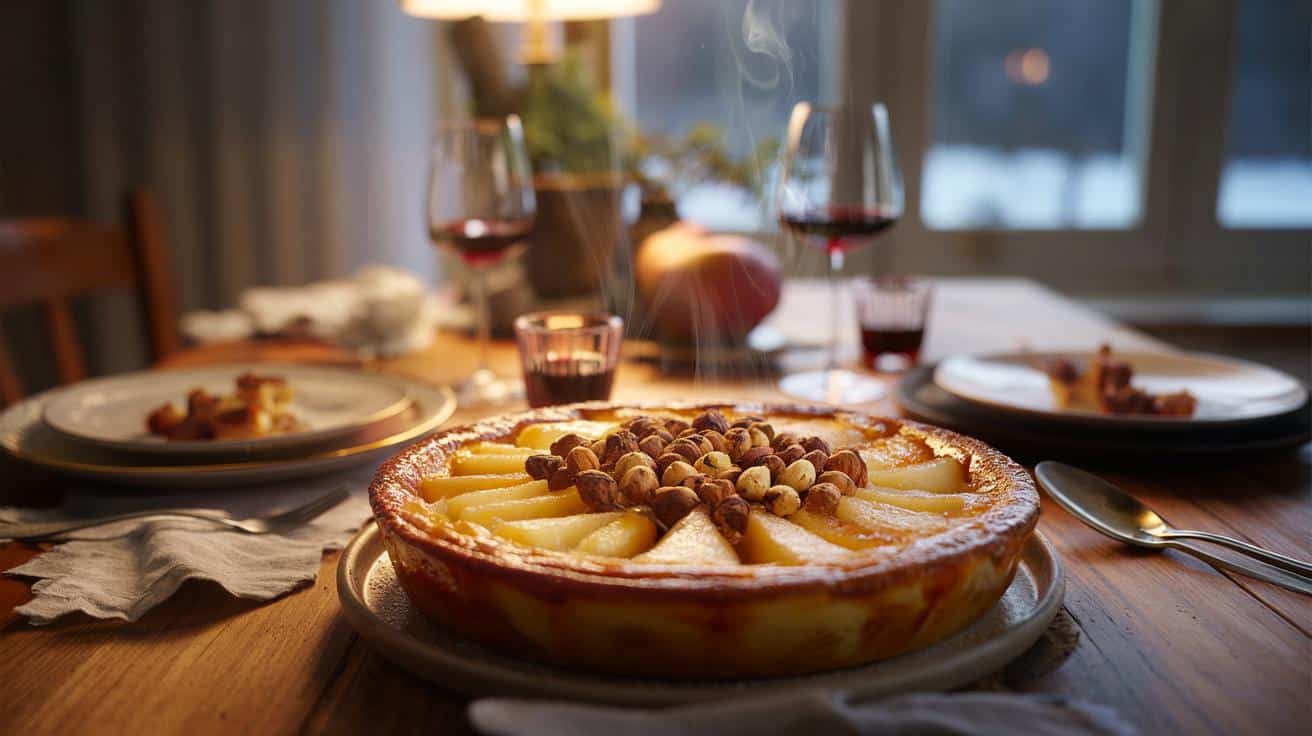
That’s where this express pear–hazelnut clafoutis slips in. It comes to the table still faintly steaming, the top golden and dotted with toasted nuts, the smell of baked pear drifting through the room. The texture sits somewhere between a soft set custard and a light cake, with chunks of fruit that collapse under the spoon.
Warm fruit, a barely wobbly cream and a crunchy nut topping turn a ten-minute prep into the sort of dessert people remember.
That mix of comfort and restraint has made it a repeat request. The cook who shared the recipe admits she almost feels guilty serving the same thing all winter. But every time she hints at changing it, family and friends tell her not to. In a season of stews and rich sauces, this is the one sweet that feels both indulgent and manageable.
The ingredients: short list, big payoff
Part of the charm is how little you need. For a standard 24–26 cm round baking dish, enough for six to eight people, the basic shopping list is refreshingly compact:
- 4 ripe pears, firm enough to hold shape when baked
- 3 eggs
- Whole milk
- Plain flour
- Caster sugar
- Butter, ideally lightly salted
- A generous handful of hazelnuts
- Vanilla, either extract or ground
Nothing is exotic, which is exactly the point. The difference lies in how you choose those staples. Riper pears will bring their own sweetness and aroma. Whole milk and real butter give body to the custard-like base, turning a makeshift pudding into something guests ask about on the way home.
Choosing the right pears when the weather turns cold
Pears are one of the few fruits that genuinely shine in the depth of winter, but not all of them behave well in the oven. You want flesh that softens without dissolving into mush.
Varieties similar to Conference or Comice work especially well. The trick is in the feel. Press gently near the stalk: the fruit should yield slightly but not collapse. Rock-hard pears will still be chalky after baking. Over-ripe ones will leak too much juice and thin out the batter.
➡️ Last chance to nail a memorable king cake: the recipe everyone agrees on
For baking, aim for “soft but not slouching”: pears that are ready to eat today, not ones you should have eaten last week.
If yours are a bit too firm, leave them in a fruit bowl for two or three days at room temperature. That small wait can be the difference between a bland, mealy dessert and a perfumed, spoon-soft centre.
Making the batter: think thick crêpe mix
The base of this clafoutis is essentially a slightly denser pancake batter. That simplicity is part of why it has become a host’s secret weapon for last-minute dinners.
Step-by-step method
- Heat the oven to around 180°C (350°F).
- Butter the dish generously, then dust it with a spoonful of sugar so the sides caramelise lightly.
- Whisk eggs and sugar together until the mixture looks paler and lightly foamy.
- Sift in flour and whisk again to avoid lumps.
- Stir in melted butter.
- Gradually add milk, whisking, until you have a smooth, pourable batter that lightly coats the back of a spoon.
- Finish with vanilla for fragrance.
From cracking the first egg to pouring the last drop of batter, the process takes less time than finding a streaming password someone has forgotten again.
Getting the fruit right: generous, home-style chunks
Clafoutis carries a sort of “grandma’s house” reputation, and the way you cut the fruit reinforces that. This is not the place for intricate slices or fussy fan shapes.
- Peel the pears.
- Quarter them and remove cores and seeds.
- Cut into chunky pieces of about 2–3 cm.
- Scatter them across the prepared dish in a loose, even layer.
The aim is simple: every spoonful should hit fruit. Leave small gaps so the batter can flow between the pieces. Pour the batter gently over the top. Some pear pieces can stay visible at the surface; they will catch a bit of colour and give the finished pudding a cosy, rustic look.
The hazelnut trick that changes everything
On its own, pear clafoutis is pleasant. With a scattering of hazelnuts baked into the surface, it turns into something with actual texture and contrast. The nuts toast in the oven, developing an almost praline-like aroma that balances the softness below.
- Roughly chop the hazelnuts if they’re whole.
- Sprinkle them in an even layer over the batter.
The spoon meets crunch first, then glides into warm, custardy pear – that small contrast is what makes guests go back for seconds.
Keeping the hazelnuts on top rather than mixed into the batter lets them brown properly, instead of softening and disappearing into the mix.
Baking and the fine line between creamy and dry
Once the dish is assembled, it bakes for around 22–30 minutes at 180°C, depending on your oven. Time matters less than visual cues, especially if you prefer a slightly wobbly centre.
- The top should be golden, not pale.
- The edges should look set and slightly puffed.
- The middle should still tremble a little when you gently shake the dish.
Pull it too late and you risk a firm, almost rubbery cake. Take it out when the centre is just barely set and you get something closer to a rich custard. Letting it rest for about ten minutes before serving helps the structure settle without losing warmth.
Host-approved tricks for stress-free winter dinners
Home cooks who rely on this clafoutis tend to share a few quiet habits that make it nearly foolproof:
- Use whole milk for extra creaminess.
- Sift the flour to keep the batter smooth.
- Leave some pears poking through the surface; they caramelise and look inviting.
- Keep hazelnut pieces fairly large so the crunch stands out.
- Prepare everything in one large bowl to cut down on washing-up.
Many also pre-measure the dry ingredients before guests arrive. Then, while the main course simmers or rests, they assemble the clafoutis in less than ten minutes and slide it into the oven. The dessert bakes while people eat, and comes out right as the conversation slows and someone inevitably says, “I could have a little something sweet.”
Variations that keep the basic idea alive
Once you have the method in your hands, the flavour profile can shift with whatever sits in your fruit bowl or cupboard. Some simple twists keep the core formula while changing the mood.
| Variation | What changes | Result |
|---|---|---|
| Pear & apple mix | Half pears, half tart apples | Slightly sharper, more aromatic bake |
| Almond topping | Swap hazelnuts for flaked almonds | Lighter crunch, nutty but softer flavour |
| Chocolate version | Add dark chocolate chips to the batter | Richer, pudding-like dessert kids tend to claim first |
| Brown sugar twist | Use unrefined cane sugar | Deeper caramel notes, slightly darker colour |
Because the structure stays the same, you can adapt it to what you have on hand: a last punnet of plums, a handful of walnuts, or a forgotten bar of chocolate. That flexibility explains why some households see this clafoutis as their unofficial winter “signature”, even though it shifts slightly from Sunday to Sunday.
How to serve it so people linger at the table
The dessert is best served warm, not scorching hot. At that stage the flavours of pear and hazelnut are strongest, and the custard is still supple. Many hosts bring the entire dish to the table and serve it with a large spoon, family-style.
A few easy additions turn it into something that feels restaurant-ready without adding much work:
- A spoonful of thick cream on each portion for extra richness.
- A scoop of vanilla ice cream on warm clafoutis for a hot–cold contrast.
- A dusting of icing sugar right before serving, for a “snowy” winter look.
Leftovers can be kept, covered, in the fridge for up to two days. A gentle reheat in a low oven or a short blast in the microwave brings the softness back. Many people find the flavour even more pronounced the next day, as the custard and fruit settle together.
From French classic to realistic weeknight option
For British and American readers who may know clafoutis only as a cherry-laden French classic, this pear-and-hazelnut take shows how adaptable the idea really is. At its heart, clafoutis is just fruit baked in a simple, eggy batter – somewhere between Yorkshire pudding and custard tart.
That makes it handy for weeknights too. Imagine a Tuesday where you throw together a soup and a salad, then slip this into the oven while everyone eats. By the time bowls are cleared, something warm and fragrant is ready without feeling like you have staged a full dinner party.
What “express” actually looks like in a busy household
The word “express” is often used loosely in food writing, but here the timings hold up under real-life conditions. In many homes, the timeline goes something like this:
- 10 minutes: peel and chop pears, whisk batter, assemble in the dish.
- 25 minutes: bake while you eat the main course.
- 10 minutes: rest before serving while people chat or finish drinks.
Within three quarters of an hour, with only a sliver of active cooking, you move from “we should have bought biscuits” to a dessert that smells like someone has been baking for hours. That gap between effort and impact is exactly why one cook now half-jokes that she doesn’t dare serve anything else when guests come round in winter – and why more households are quietly adopting the same strategy.