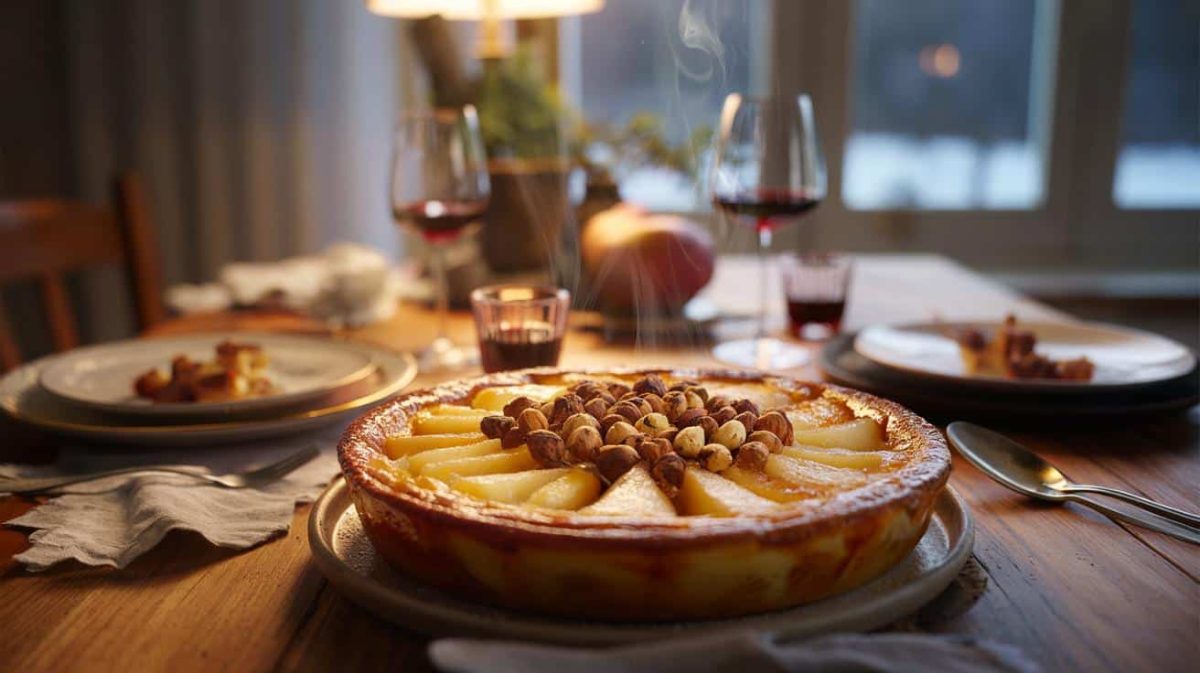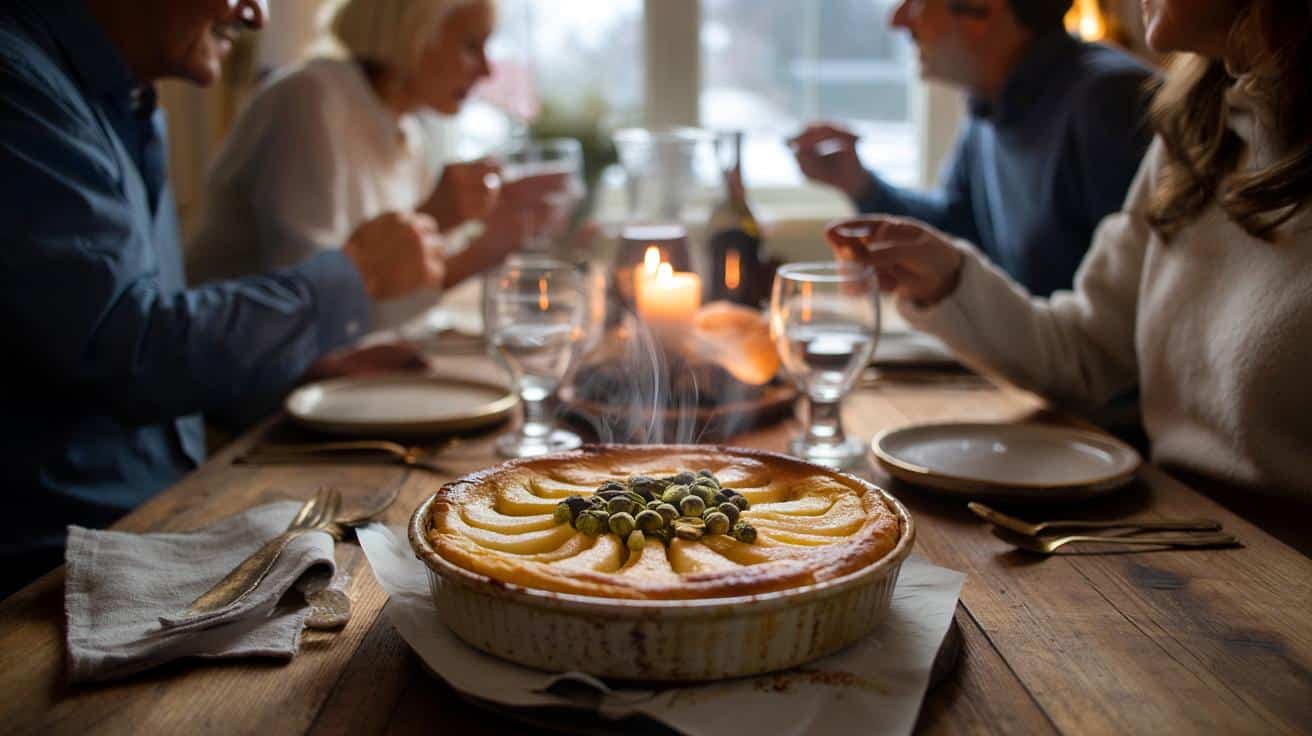
Across France this winter, a humble pear and hazelnut clafoutis has been turning low-key suppers into long, chatty evenings. No blowtorch, no stand mixer, just a batter like pancake mix and a baking dish that goes straight from oven to table.
The winter dessert that keeps pushing everything else off the menu
Picture that familiar scene: plates cleared, candles half-melted, everyone craving “a little something” but no one willing to wait an hour for it. That is exactly the gap this clafoutis fills. It lands on the table hot, fragrant and still wobbling slightly in the middle, and suddenly nobody misses the elaborate tart you thought you should have made.
This version combines ripe pears with a simple, custardy batter and a scattering of hazelnuts. The texture sits somewhere between a flan and a light cake. The fruit softens without collapsing. The hazelnuts toast on top and bring a gentle crunch.
Once people have tasted it warm, many home cooks admit they “barely dare” serve any other dessert in winter.
The recipe is French in spirit, but the logic travels well to any cold-weather kitchen: use one seasonal fruit, a basic batter, and a nut topping to build something that smells and tastes like comfort.
What actually goes into this pear and hazelnut clafoutis
The original French version leans on a very short, practical ingredient list. Everything is likely either in your fridge already or easy to pick up on the way home from work.
- 4 ripe pears (varieties that hold their shape, like Conference or Comice)
- 3 whole eggs
- 300 ml whole milk
- 80 g plain flour
- 80 g caster sugar, plus 1 tablespoon for the dish
- 40 g melted salted butter, plus extra for greasing
- 50 g hazelnuts, whole or roughly crushed
- Vanilla (a pinch of powder or about 1 teaspoon liquid extract)
There is a clear rule here: because the list is short, quality matters. Full-fat milk brings body. Proper butter, not a low-fat spread, gives flavour and colour. Pears need to be ripe, not rock hard.
The difference between a passable pudding and the one guests still mention weeks later often lies in the milk, the butter and the fruit.
Choosing pears that bake into soft slices, not mush
In January and February, pears sit among the last generous fruits of the season in Europe and much of North America. For this dessert, they need to stay intact in the oven, then melt in the mouth.
➡️ AIChina, Russia condemn Trump’s pressure on Venezuela
➡️ This milk-braised pork roast is so tender you can cut it with a spoon
➡️ Italians Can’t Believe It: In France, Almost Everyone Cooks Pasta The Wrong Way
➡️ James Webb telescope discovers closest galaxy to the Big Bang ever seen
➡️ This melting parsnip–potato gratin even reconciles kids with winter vegetables
Conference and Comice types are ideal: firm flesh, aromatic and not too juicy. The trick is in the ripeness. The fruit should feel slightly soft around the stem but not squishy.
- If pears are under-ripe, they stay hard and bland in the dish.
- If they are over-ripe, they leak juice, thinning the batter and turning the texture soggy.
Leaving them for two or three days in a fruit bowl at room temperature usually hits the sweet spot. A subtle perfume and gentle give under your thumb are good signs.
The batter: essentially a thicker pancake mix
One reason this clafoutis fits busy winter evenings is that the method reads like a weekday pancake routine. The aim is a smooth, slightly thick batter that clings to the spoon.
Step-by-step method
- Heat the oven to 180°C (about 355°F).
- Generously butter a round baking dish (24–26 cm across) and sprinkle it with 1 tablespoon of sugar.
- In a large bowl, whisk 3 eggs with 80 g sugar until pale and lightly foamy.
- Sift in 80 g flour and whisk until smooth.
- Pour in the 40 g melted butter, then mix again.
- Gradually add the 300 ml milk while whisking, so no lumps form.
- Stir in the vanilla at the end.
You should now have a glossy, lump-free batter that behaves like a rich crepe mixture rather than a cake dough. At this point, the hardest work is already done.
Building the fruit layer so every spoonful gets some pear
The fruit layer is where the dessert gets its “proper home cooking” look. The goal is generosity, not precision.
- Peel the 4 pears.
- Cut them into quarters, remove cores and seeds.
- Slice the quarters into chunks roughly 2–3 cm wide.
- Spread the chunks across the base of the buttered, sugared dish.
The fruit should form a single, fairly dense layer, but not be tightly packed. Small spaces between pieces let the batter run through and set around them.
When you pour the mixture over, leave some fruit visible on top. That rustic look is part of the appeal.
The tiny extra step that changes the whole dessert: hazelnuts
The hazelnuts are more than a garnish. They add crunch to contrast the soft centre and bring a deep, toasted aroma as they brown.
- Roughly crush 50 g hazelnuts if they are whole.
- Scatter them across the surface of the batter once it is in the dish.
Because they sit on top, the heat hits them directly and creates a light, nutty crust. The experience when you eat it shifts from crisp bite, to creamy custard, to silky pear.
Cooking time and the signs of a perfect set
The clafoutis bakes at 180°C for roughly 25 minutes. Ovens vary, so start checking from 22 minutes and do not just trust the timer.
- The top should be golden and slightly puffed at the edges.
- The sides look set and lightly browned.
- The centre still trembles a little if you nudge the dish.
Taking it out while the middle still quivers gives a soft, almost creamy interior once it cools slightly. Leaving it in too long turns the texture firm and dry, closer to a sponge than to a custard.
Tips that make the recipe almost fail-proof
On paper the method is simple, but small tweaks help it work every time, even when you are cooking with guests already at the table.
- Stick to whole milk for a richer, smoother texture.
- Sift the flour to avoid lumps if your whisking is rushed.
- Keep some pear pieces showing on top for both looks and texture.
- Do not crush the hazelnuts too finely; you want proper shards.
- Let the clafoutis rest 10 minutes out of the oven before serving so it firms up slightly.
The entire batter can be made in one large bowl, which keeps washing up minimal. That detail matters when guests text that they are “five minutes away”.
Variations that keep the basic idea but change the mood
Once you know the base recipe, it becomes a template for late-winter puddings. The same batter supports different fruits and nuts without fuss.
- Swap hazelnuts for flaked almonds, lightly toasted.
- Mix pears with apples for a little tang.
- Stir a small handful of dark chocolate chips into the batter.
- Use unrefined cane sugar instead of white for a caramel-like flavour.
The result stays familiar but never quite the same. For hosts who keep seeing the same people around their table all season, that flexibility helps.
Serving suggestions and how long leftovers really last
This clafoutis shines warm rather than boiling hot. Straight from the oven, give it a few minutes so nobody burns their tongue and the custard can settle. It looks inviting served directly from the dish with a large spoon.
To dress it up without adding much work:
- Drop a spoonful of thick cream on each portion.
- Or pair it with vanilla ice cream, letting it melt into the warm pudding.
- Dust the top with icing sugar just before serving for a light, snowy finish.
If any remains, which many hosts say is rare, cover the dish and keep it in the fridge for up to two days. To revive the texture, reheat single portions briefly in the microwave or in a low oven around 150°C for several minutes.
A closer look at what “clafoutis” means
The term “clafoutis” originates from central France and traditionally refers to a baked batter poured over cherries. This pear and hazelnut version is technically closer to what French cooks would call a “flognarde”, a similar dessert made with other fruits. Outside France, most people use “clafoutis” for any fruit baked in this style.
| Feature | Classic cherry clafoutis | Pear and hazelnut version |
|---|---|---|
| Main fruit | Dark cherries, often with stones | Ripe pears, sometimes mixed with apples |
| Texture | Set custard with juicy pockets | Softer centre, more melting fruit |
| Topping | Usually plain or lightly sugared | Hazelnuts or other nuts for crunch |
For home cooks, the distinction is mostly academic. The main point is that the dish sits somewhere between cake and flan, uses pantry staples and leans heavily on whatever fruit is around.
How this kind of dessert changes the feel of a winter meal
There is also a social element. A make-ahead tart looks impressive, but it arrives cold, often in neat slices. A clafoutis like this appears warm from the oven, still steaming, and everyone leans in. The host scoops, people pass plates along, kids argue over corner pieces where the nuts have caught slightly.
In practice, that can change the rhythm of an evening. Instead of clearing the table and shifting straight to phones or television, guests stay put. They wait for the smell of hot pear and toasted hazelnut, chat about recipes, and usually ask for the method. Many hosts who introduce this pudding once notice the same outcome: through the rest of winter, guests keep requesting it, and other desserts quietly move to the back of the recipe folder.