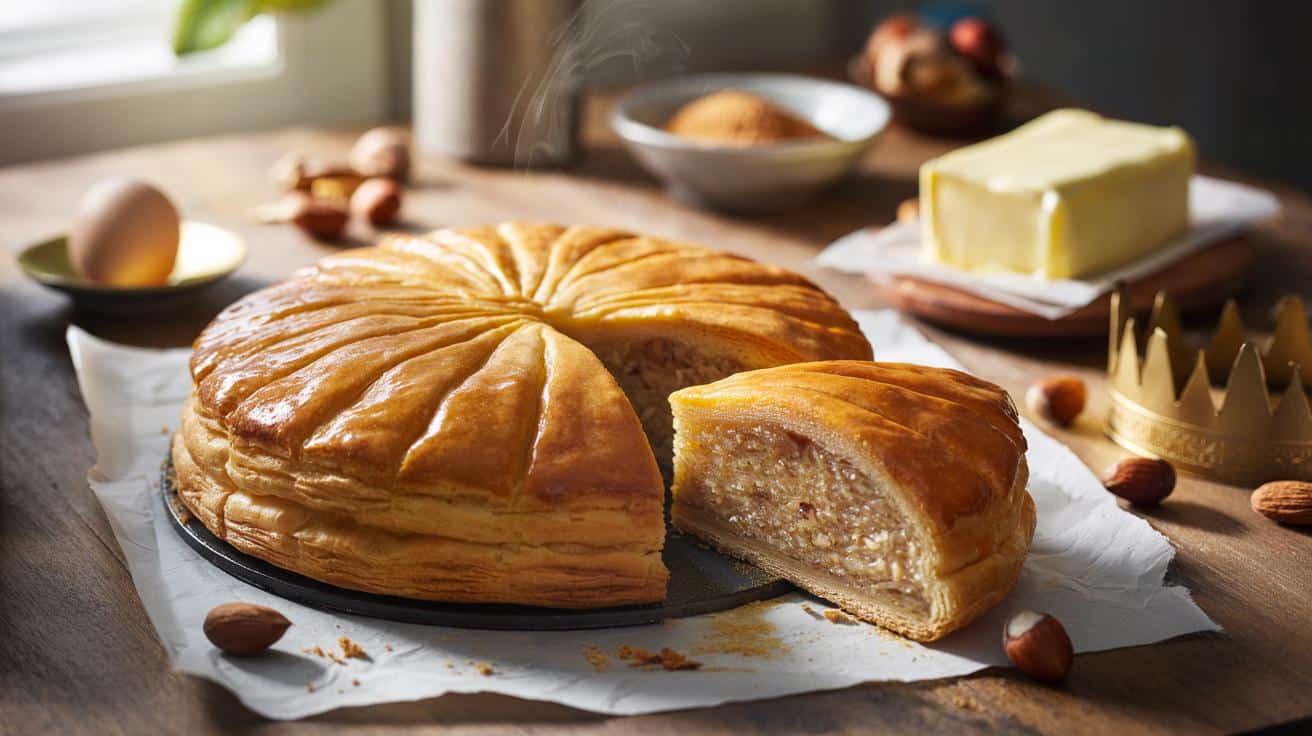
Epiphany may be behind us, but for many home bakers there’s still time for a final galette des rois, the French king cake that fills kitchens with warm butter and toasted almond. This “extra” galette often becomes the one people remember, precisely because it’s the last one before the year moves on.
The late-January galette that still steals the show
By the end of the month, most bakery counters have moved on from the New Year rush. At home though, plenty of cooks are left with a slight frustration: the galette bought in a hurry was too greasy, the supermarket version lacked flavour, or the pastry collapsed in the middle.
That final attempt becomes a kind of quiet challenge: one last chance to get it right, with a homemade galette that flakes properly, smells of real butter and carries a generous hit of almond.
Handled with care, a king cake at the very end of January can feel more special than the ones eaten on Epiphany itself.
The good news is that a standout galette does not require chef-level skills. What changes everything is the quality of the ingredients, a precise but simple method, and one habit many people skip: letting the almond cream rest in the fridge for several hours or overnight.
The ingredients that actually matter
For a classic galette des rois serving 6 to 8 people, the backbone of the recipe looks familiar: puff pastry, butter, sugar, ground nuts, eggs, and a splash of rum or almond extract. On paper, it is almost minimalist. The detail lies in how you choose and treat each component.
- All-butter puff pastry, ideally from a bakery or high-quality brand
- Equal quantities of softened butter, cane sugar and ground almonds
- Optional mix of almonds and hazelnuts for extra depth
- One egg for the filling, another for glazing
- Rhum ambré or a few drops of bitter almond extract
- Cold water to seal the pastry, instead of egg
- A ceramic “fève” or a whole nut hidden in the filling
Half of the success of a galette sits in the butter: choose one good block rather than cutting corners on several cakes.
Why butter quality changes everything
Many failed galettes share the same culprit: butter that contains too much water. When it melts, that excess water leaks out, soaks the pastry and turns the bottom soggy and heavy.
French bakers often rely on AOP butters such as Charentes-Poitou, or on “tourage” butter designed for laminated dough. These butters are firmer and melt more slowly. The flavour is cleaner, with a slight hazelnut note, and they support the structure of the layers without flooding the tray in fat.
Outside France, a good rule is to pick a high-fat, cultured butter with at least 82% fat, straight from the chilled section, not a spread. That small decision alone can lift a galette from claggy to crisp.
Mastering the almond cream, without turning it into custard
Many recipes mix almond cream with crème pâtissière (pastry cream). This gives a frangipane-style filling, softer and more delicate, but also more technical. For a late-January success with fewer risks, pure almond cream works beautifully.
The key formula is “equal parts”: the same weight of butter, sugar and ground almonds produces a rich but balanced centre.
The method stays straightforward:
- Soften butter at room temperature until it gives easily under a spoon.
- Beat it with unrefined cane sugar until the mixture looks slightly paler.
- Add one egg and mix just enough to blend.
- Fold in the ground nuts, keeping the texture thick, not runny.
- Flavour with rum or bitter almond extract, tasting as you go.
The mixture should cling to the spatula and spread slowly rather than pour. If it feels slack, more ground almonds help correct it.
The overnight rest that home bakers often skip
Once the filling is mixed, patience comes into play. Leaving the bowl in the fridge for at least four hours, ideally overnight, changes both flavour and texture.
- Nut aromas infuse the butter, giving a more intense almond profile.
- The dry ingredients soak up moisture, so the cream sets slightly.
- The thicker filling holds its shape inside the galette and is less likely to leak.
A rested almond cream behaves like a professional filling: it pipes neatly and stays inside the pastry where it belongs.
For home cooks used to throwing a galette together in one go, this pause can feel unnecessary. In practice, it is the difference between a cake that spills out on the baking tray and one that slices cleanly with a glossy interior.
Building a leak-proof galette
Assembly is where many shortcuts creep in. A little structure here pays off later when guests cut their slice and the filling has stayed perfectly in place.
Step-by-step structure
- Lay the first puff pastry disc on baking parchment.
- Spread or pipe the almond cream in a spiral, leaving a 2 cm border clear.
- Hide the fève off-centre, buried in the cream.
- Brush the empty edge with cold water, not egg.
- Cover with the second disc of pastry and press gently from the middle outwards to seal.
- Crimp or “chiqueter” the edge with the back of a small knife or fingertip.
The clear border acts as a buffer: when the filling heats up and expands, it has room before it reaches the seal. Using water instead of egg on that seal lets the pastry rise properly in the oven.
Glaze, pattern and those little vents
The shine on a good galette rarely comes from an over-thick layer of egg. A light glaze, applied twice with a rest in between, gives a deep golden finish without a scrambled-egg look.
Once glazed, bakers score the top very lightly with the back of a knife. Classic patterns include curved lines, wheat sheaves or a simple grid. The aim is decoration, not cutting through the pastry.
Tiny vents in the top act as safety valves, letting steam escape so the pastry rises evenly instead of ballooning randomly.
Three or four small holes, including one in the centre, are enough. They stop the galette inflating like a dome and then collapsing dramatically as it cools.
Turning butter and almonds into something golden
The baking schedule shapes both texture and flavour. A single, gentle bake risks undercooked layers; too fierce a blast burns the top while the middle stays pale.
| Stage | Temperature | Duration | Purpose |
|---|---|---|---|
| Initial bake | 200°C | 10–15 min | Kick-starts puff and colour |
| Second phase | 180°C | 20–25 min | Dries the layers and cooks the filling |
Towards the end, colour tells you more than the timer. Edges should be deeply golden, with slightly darker highlights on the scored ridges. A loose sheet of baking paper on top protects it if it darkens too quickly.
Once out of the oven, a short rest matters. Fifteen minutes on the counter lets the cream settle and the pastry firm up. Served warm, not boiling hot, the galette cuts more neatly and the butter aroma is at its peak.
How to make this king cake truly memorable
Beyond getting the basics right, a few small twists can turn a late-January galette into an annual ritual rather than an afterthought.
- Swap part of the almonds for toasted hazelnuts and grind them yourself.
- Grate a little lemon or orange zest into the filling for a bright, fresh lift.
- Pair the cake with a dry cider, a strong espresso or a smoky tea to cut through the richness.
Think of the galette as a buttery frame: once the technique is steady, subtle variations in nuts, citrus or spirits become your signature.
The fève, the crown and why adults still care
Part of the charm of galette des rois lies in the ritual rather than just the taste. The fève, a small charm or figurine hidden in the filling, turns dessert into a small game of chance. Whoever finds it wears the crown and picks their “royal” partner at the table.
French families often keep the tradition alive even after Epiphany, especially at the end of January when gatherings are smaller and more relaxed. The pressure of Christmas has gone, and the king cake becomes an excuse to get friends round on a quiet Sunday afternoon.
Reducing waste and stretching the recipe
A late-season galette also offers a practical advantage: it fits well with using up leftovers. Ground nuts close to their “best before” date, that last splash of rum, or odd shapes of puff pastry from another project all find a home here.
Trimmings from the edges can be kept, sprinkled with sugar and baked separately into quick, crisp snacks. For smaller households, the recipe divides easily; the same technique works for individual galettes the size of a saucer, which freeze well once baked and cooled.
For curious bakers: frangipane versus almond cream
The word “frangipane” is often used loosely. Strictly speaking, it refers to a mixture of almond cream blended with pastry cream. This gives a lighter, more custardy texture and a slightly milder almond taste.
The late-January approach described here uses only almond cream. That version is denser, more direct in flavour and easier to manage, especially for those baking without a stand mixer. Once you feel comfortable with this, adding a small quantity of pastry cream turns into an interesting project for a future year.
Starting simple, with pure almond cream and solid technique, sets a base you can refine from one January to the next.
By treating this “last chance” galette as a calm, well-planned bake rather than a rushed festive obligation, home cooks often produce their best king cake of the season. The crowns on shop shelves might be gone, but the smell of warm butter and almonds still has time to fill the house before February arrives.