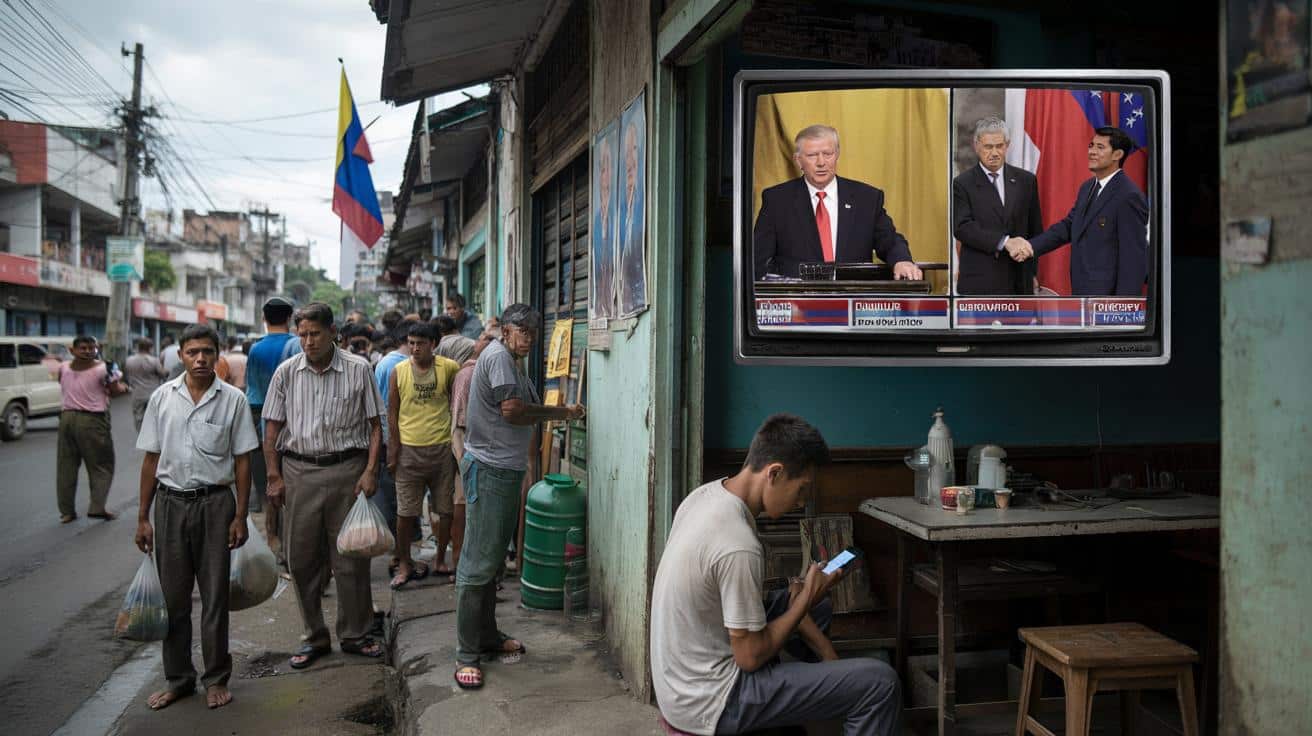
On a sticky afternoon in Caracas, the sound of car horns mixes with bursts of political speeches coming from an old radio in a corner café. On the TV above the counter, images flicker: Donald Trump at a podium, satellite maps of oil fields, the Venezuelan flag rippling in slow motion. A few customers look up when the anchor reads the headline: “China and Russia condemn U.S. pressure on Venezuela.” Most keep stirring their coffees, as if the fate of their country were just background noise.
Outside, posters of Nicolás Maduro peel under the sun, while a teenager scrolls TikTok on a cracked phone, pausing on a clip of Trump talking about “maximum pressure.” Another video shows Vladimir Putin and Xi Jinping shaking hands. Worlds colliding on a 6-inch screen.
The great game of power is playing out. And Venezuela is right in the middle of the board.
Why Trump’s pressure on Venezuela rattled Beijing and Moscow
When Donald Trump ramped up sanctions on Venezuela, it wasn’t just about Caracas. It was a message to anyone betting on the country’s oil, ports, or political survival.
China and Russia heard that message loud and clear.
Trump’s White House squeezed Venezuela’s state oil company, blocked U.S. dealings in Venezuelan crude, and backed opposition leader Juan Guaidó as “interim president.” On paper, it looked like a classic regime-change play. On the ground, it felt like a slow suffocation of an already fragile economy.
For Beijing and Moscow, both with billions sunk into loans, weapons deals, and infrastructure projects, this was not some distant drama. It threatened real money, real influence, and a symbolic ally on America’s doorstep.
Look at the numbers and the story comes into focus. Russia’s state oil giant Rosneft helped sell Venezuelan crude when almost nobody else would touch it. Chinese banks had lent Caracas more than $60 billion over the years, to be repaid “in oil.”
Sanctions turned that repayment plan into a guessing game. Tankers carrying Venezuelan crude wandered the seas with their transponders switched off. Companies changed names. Flags of convenience appeared and disappeared.
Inside Venezuela, ordinary people saw empty supermarket shelves, endless queues for fuel in an oil-rich country, and a currency melting in their hands. While Trump called Maduro a “dictator,” on Chinese and Russian state TV the narrative was very different: a sovereign nation under siege by an overreaching United States.
➡️ This milk-braised pork roast is so tender you can cut it with a spoon
➡️ James Webb telescope discovers closest galaxy to the Big Bang ever seen
➡️ Italian torta nua: the recipe for this cloud cake with custard, a pure delight to share
➡️ Shoppers in China rush to Ikea after furniture giant announces closure of 7 stores from Feb 2
➡️ Grim photo captures polar bear mom and cubs resting in mud in summer heat
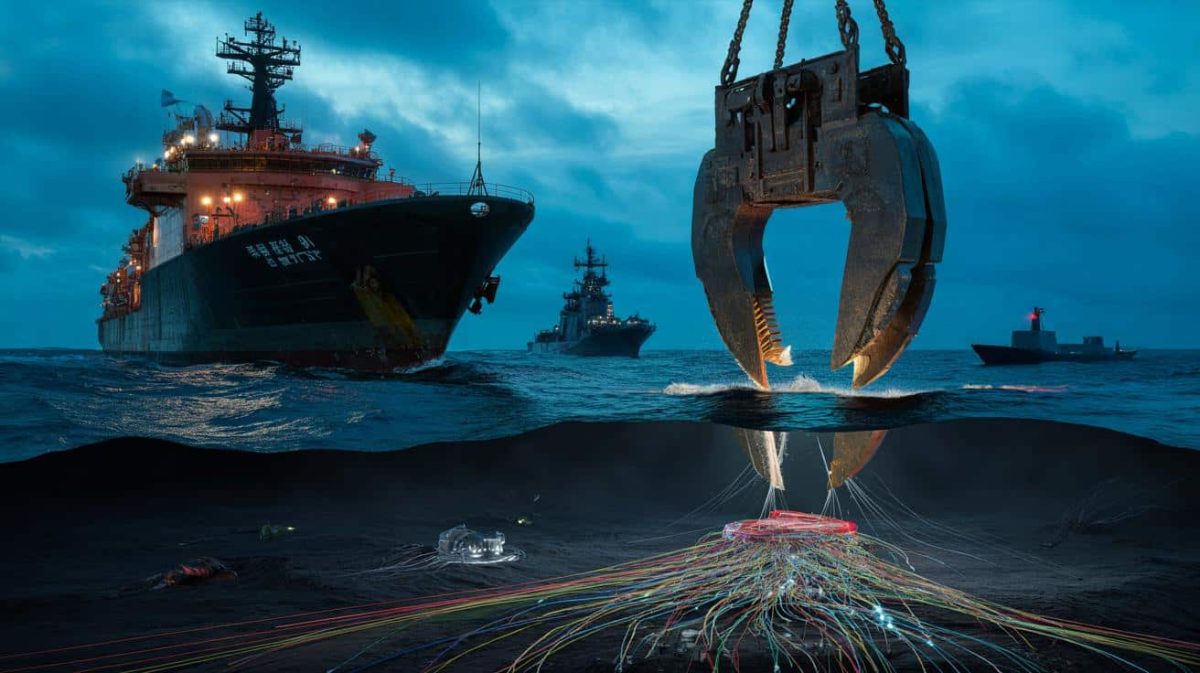
From Beijing’s point of view, Venezuela was another test of U.S. dominance over the global financial system. Washington wasn’t sending tanks. It was wielding banks: cutting access to dollars, threatening secondary sanctions, and scaring off any foreign firm that dared to touch Venezuelan oil.
Moscow read the play as déjà vu. Sanctions on Iran, sanctions on Russia, sanctions on Venezuela – same toolkit, same pressure points.
So when Trump talked tough about “all options on the table,” China and Russia didn’t just see a local quarrel. They saw a pattern. A U.S. willing to weaponize its financial muscle, reshape regimes, and redraw the map of energy flows with a few signatures. That’s when the statements of condemnation began to sound a lot more like warnings.
How Beijing and Moscow pushed back against Trump’s Venezuela strategy
The first response from China and Russia was verbal, but it wasn’t timid. Officials in both capitals accused Washington of “interference” and “illegal unilateral sanctions,” phrases that might sound dry until you realize they’re diplomatic code for: “You’re crossing a line.”
Then came the quieter moves. Russian military advisers appeared in Caracas “for maintenance support.” Chinese shipments of medical supplies and food baskets were framed as humanitarian aid, but also as clear signals: Maduro was not alone.
Behind closed doors, diplomats in New York and Geneva lobbied against any talk of armed intervention. Beijing and Moscow used every inch of their UN Security Council seats to block resolutions that could legitimize tougher U.S. action.
One episode still circulates in Venezuelan political circles like an urban legend. In early 2019, as Guaidó’s movement gained international recognition, rumors spread that Maduro might flee. At the same time, Russian military planes landed at Caracas airport, carrying around a hundred personnel and a shipment of equipment.
For supporters of Maduro, those planes were a lifeline. For Trump’s team, they were a provocation.
Around that period, Russian state media started airing more flattering portraits of Venezuela’s government, highlighting social programs and “resistance” to U.S. pressure. Chinese outlets emphasized the suffering caused by sanctions, spotlighting hospitals without supplies and families struggling to buy food. Media became another front line.
On the strategic board, Venezuela was never only about ideology. For Russia, it offered a foothold in the Western Hemisphere, right where Washington least likes surprises. For China, it was a piece in a broader energy security puzzle: long-term crude contracts, infrastructure deals, and access to a market eager for cheap electronics and machinery.
Trump’s pressure threatened to flip that table. Sanctions scared off many private players, but state-backed actors from Russia and China could still maneuver, albeit at higher risk. They condemned Washington not just from principle, but from calculation.
Let’s be honest: nobody really does this every single day. No global power defends “sovereignty” without also thinking about barrels, bases, and ballots. For Beijing and Moscow, pushing back against Trump’s Venezuela push was as much about setting a precedent as saving a partner.
What this clash means for everyday people — and for the next crisis
If you want to understand how this geopolitical storm hits the ground, start with a simple gesture: watch how Venezuelans line up at dawn for basic goods. Long before sunrise, people stand with plastic bags and empty jerrycans, waiting for fuel or rice or cooking oil that might not arrive.
Trump’s sanctions, China’s loans, Russia’s military advisors — all of this sounds abstract from a distance. On the street, it turns into blackouts, roaring generators, and families cooking on wood fires in high-rise balconies.
When great powers clash over a country, the first to feel the shock are the ones who never voted for any of them.
There’s a common mistake when we talk about Venezuela: we treat it like a chessboard and forget it’s also a neighborhood. Analysts debate whether sanctions “work,” or whether Russia and China are “propping up a regime,” while parents wonder if they’ll find powdered milk this week.
We’ve all been there, that moment when global headlines feel completely disconnected from the grocery list in your hand.
So when China and Russia condemn Trump’s pressure, and Washington fires back about “authoritarian allies,” the human layer risks getting swallowed by talking points. *Real lives are wedged between speeches, strategies, and the quiet arithmetic of hunger and survival.*
“Foreign powers talk about democracy, sovereignty, and stability,” a Caracas teacher told me, “but my students just want electricity that doesn’t cut out during homework and a bus that actually shows up.”
- Follow the money trails
Ask who profits from sanctions, loans, discounted oil, and emergency aid. Behind every statement of condemnation lies a balance sheet. - Watch the small signals
Cargo flights, naval visits, and new telecom contracts often tell you more than grand speeches at the UN. - Listen to local voices
Journalists, nurses, drivers, teachers – they read the impact of global pressure in hospital lines and empty bus stops long before think tanks do. - Track the energy map
Venezuela’s crude doesn’t just disappear. It finds new routes, new buyers, new blends. Those shifts quietly reshape global markets. - Remember the plain truth
Big powers rarely act out of pure generosity. Interests, fears, and future leverage sit behind nearly every “principled” press release.
Beyond Venezuela: a preview of the next global standoff?
The Venezuela showdown offered a glimpse of a world where U.S. power is contested on every front, not just with troops, but with currencies, tankers, and information. When Trump tightened the screws on Caracas, China and Russia didn’t just complain; they positioned themselves as alternative lifelines, even if costly and imperfect ones.
This is the template we’re likely to see again. A crisis in a resource-rich state. Washington leans on sanctions and diplomatic isolation. Beijing and Moscow step in with loans, security ties, and loud condemnations of U.S. “pressure.” Local elites hedge their bets while ordinary people pay the price.
For readers thousands of kilometers away, this might feel distant, like a movie set in places you’ll never visit. Yet the ripple effects touch you too. Gas prices, migration flows, even the apps on your phone are linked to the same global tug-of-war playing out over places like Venezuela.
Next time you scroll past a headline about some far-off sanctions or a foreign minister condemning another, pause for a second. Beneath the formal language, there’s a quiet struggle over who gets to decide the rules of the game – and who ends up living with them.
| Key point | Detail | Value for the reader |
|---|---|---|
| China and Russia’s stake in Venezuela | Billions in oil-backed loans, arms deals, and infrastructure projects exposed to U.S. sanctions | Helps you see why they condemn Trump’s pressure as more than just rhetoric |
| Sanctions as a new kind of warfare | Financial restrictions, secondary sanctions, and dollar access used instead of direct military force | Gives a framework to interpret future crises beyond simple “war or peace” headlines |
| Human cost behind geopolitics | Fuel lines, blackouts, and shortages in daily Venezuelan life amid the power struggle | Grounds complex foreign policy debates in real, relatable consequences |
FAQ:
- Question 1Why did China and Russia criticize Trump’s pressure on Venezuela so strongly?
They saw U.S. sanctions and support for regime change as a direct threat to their investments, their influence, and the principle that Washington shouldn’t decide who governs other countries.- Question 2Did Trump’s sanctions “work” against Maduro?
They weakened Venezuela’s economy significantly and isolated the government, but Maduro stayed in power, supported by security forces and backed diplomatically – and sometimes economically – by Beijing and Moscow.- Question 3What does Venezuela offer China and Russia?
Cheap or deferred oil, a strategic foothold in the Americas, and a political ally willing to support them in international forums against U.S.-led positions.- Question 4How are ordinary Venezuelans affected by this power struggle?
They face inflation, shortages, failing public services, and migration pressures that are driven by years of mismanagement and corruption, intensified by sanctions and international isolation.- Question 5Could this model repeat in other countries?
Yes. Any resource-rich, politically fragile state caught between Washington and its rivals could become the next arena where sanctions, loans, and “condemnations” replace open war – with similar human costs.